
Insurance Commissioner
Vote Ben AllenWe recommend voting for Ben Allen for Insurance Commissioner. Allen has the experience, knowledge, and track record to fix California's broken insurance market.
In the June primary we endorsed Patrick Wolff while mentioning that Ben Allen was also a good choice. Unfortunately, Patrick Wolff lost, so the November election is a head-to-head matchup between Ben Allen and Jane Kim. We strongly recommend Ben Allen and strongly oppose Jane Kim.
California's insurance market is broken. Insurance companies are leaving the state, the state-run FAIR Plan has blown up to 610,000+ policies (up 154% since 2021), and homeowners in fire-prone areas are getting pushed into a bare-bones backup plan that just asked for a 36% rate hike. The next Insurance Commissioner needs to understand what's actually broken and how to fix it. Only one candidate in this race does.
Why vote for Ben Allen?
Allen has spent over a decade working on insurance, climate, and consumer protection. As a State Senator, he represents the communities devastated by the Palisades Fire, where he spent the aftermath helping hundreds of constituents fight for their insurance claims, an experience he calls "a front-row seat to our broken insurance system." He watched the FAIR Plan nearly collapse under $4 billion in losses from the LA fires, with the costs spread to policyholders statewide through a $1 billion emergency assessment, and he drew the right lesson: letting the FAIR Plan grow unchecked creates systemic risk for everyone.
Standing amid smoke, ashes, and uncertainty, I saw what failure looks like.
Ben AllenCalifornia State Senator
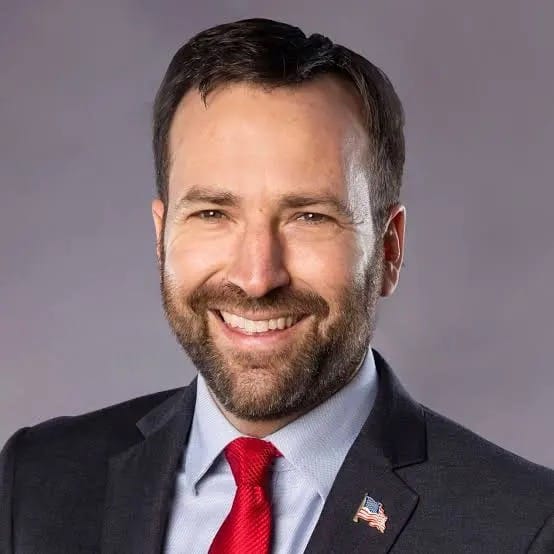
Allen didn't wait for tragedy before acting, though. In 2024, a year before the Palisades Fire, he authored Proposition 4 to authorize a $10 billion bond for wildfire risk reduction and water infrastructure that voters approved. While other candidates talk in vague terms about affordability while dodging questions about their relevant experience, Allen has already put $10 billion to work reducing the risk that makes insurance expensive in the first place.
His plan for the office pairs regulatory flexibility with hard accountability: insurers get more flexibility to price risk accurately so taxpayers won't be forced to bail them out after a disaster, and in exchange they must actually write and renew policies in California. He also wants an independent consumer advocate inside the Department of Insurance, public dashboards tracking insurer behavior, and a ban on Commissioners working for the insurance industry after leaving office. You can read his full plans in his answers to our questionnaire.
Why not Jane Kim?
Jane Kim is a career politician who went from being a San Francisco Supervisor, to losing her run for State Senate, to running a socialist political party (the Working Families Party), and now wants a state takeover of disaster insurance. She has no insurance experience, no insurance license, and no financial services background. She's running on a plan called "Disaster Insurance for All": a government-run program that would replace private disaster coverage. You'd pay a fee to the state, and the state would cover wildfires, earthquakes, and floods. Private insurers would have no reason to stick around. The next big wildfire or earthquake means either a massive taxpayer bailout or a wave of unpaid claims.
In theory, this could work, but it would depend on the state accurately pricing risk. The private market is in a crisis precisely because the state has not let insurers price risk accurately. Kim's plan would make that problem worse, not better.
Her plan reveals a fundamental misunderstanding of what insurance is. Insurance works by pricing risk and spreading it across a big pool. Kim won't commit to pricing risk. When pressed on it, she told Washington Monthly: "I imagine we would look at both value and risk, but one of the goals is to make sure that [coverage] is affordable." This hedging worries economists. Holding rates down for affordability is precisely how you end up not charging for risk. When fire-prone homes don't pay what their risk actually costs, people who live in fire-safe cities like San Francisco pay more. Insurance prices are supposed to make people think twice about building in dangerous places. When that signal is weakened, more people will move to fire-prone areas, more homes will burn, and San Franciscans will pay even more to cover it.
In short, Jane Kim wants to end private disaster insurance and dump everyone into one state-run account that mis-prices the actual risks, then hope nothing bad ever happens.
We've already seen this movie in California. The FAIR Plan, the state's existing backup insurer, got hit with $4 billion in losses from the LA fires, ran out of money, and had to charge private insurers a $1 billion emergency fee just to stay alive. That's with only 610,000 policies. Kim wants to put every California homeowner on a plan like this.
The models she points to aren't success stories either: New Zealand's earthquake insurer was overwhelmed after the 2011 Christchurch quake, underpaid people for over a decade, and is now getting sued.
We are not alone in this read. The San Francisco Chronicle's editorial board endorsed Allen under the headline "One candidate is ready to be California's insurance commissioner. The other would be a disaster." It called Kim "as rash as they come," said her platform is "politically seductive" but "a recipe for disaster," and pointed to her 2016 Prop C, the inclusionary housing rates that supervisors had to cut three times because projects stopped penciling out. Its conclusion: "If Prop C is an example of how Kim would operate as insurance commissioner, voters should run screaming."
This race is a choice between a legislator who has spent a decade on the problem and a candidate whose plan would make it dramatically worse. Ben Allen understands how insurance works and has already done more than anyone in this race to fix it. That's why he has our endorsement.
Who's running?
| Candidate | Party | Profession | Questionnaire | |
|---|---|---|---|---|
Ben Allen本‧艾倫 | Democratic | California State Senator | Read it | |
Jane Kim金貞妍 | Democratic | Attorney/Consumer Advocate | No Response |