
November 3, 2026 General Election
Updated: September 15, 2026We love San Francisco.
So we’re fighting for it.
- Build enough housing to end the affordability crisis
- Clean, safe streets and fully staffed police
- Treatment and care for the drug crisis
- A faster, more transparent City Hall
Our Endorsements
San Francisco
Candidates
Ballot Measures
San Francisco is turning a corner but the work isn’t done.
We have one-vote majorities on both the Board of Supervisors and the Board of Education. That’s why San Francisco is moving forward right now. There’s more work still to do.
Bay Area
Ballot Measures
California
Candidates
Ballot Measures
The November 3, 2026 General Election features important contests that will shape San Francisco's future.
How To Vote
Voting for the November 3, 2026 General Election will begin approximately 29 days before Election Day. You should receive your mail-in ballot a couple days before or after voting begins. Once voting begins, you can:
Vote by mail
- Mail your ballot no later than Tuesday, November 3rd, 2026
- If you missed mail pickup, drop off your ballot at your local polling place, or in any city ballot dropbox by 8pm on Election Day
Vote in person
- Vote at City Hall every day through Election Day
- Vote at your local polling place on Election Day, Tuesday November 3, 2026, from 7 am to 8 pm
Sign up so you don't miss our latest voter guide updates!
Explaining our endorsements
San Francisco
Board of Education
Vote Autumn Brown Garibay, Phil Kim, Tim TungWe recommend voting for Phil Kim, Autumn Brown Garibay, and Tim Tung for Board of Education.
Voters may cast votes for up to 3 candidates in this race, and we think these three should earn your vote.
SFUSD has climbed from a "negative" budget certification to "qualified" and brought algebra back to 8th grade after a 12-year ban. But reading and math proficiency remain among the lowest in California, the district has made no progress on the literacy and math goals it set for itself in 2022, and the overhaul of student assignment has slipped to 2028-29. Three seats are open, and these three candidates each bring something the Board needs.
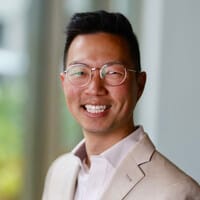
Phil Kim
Phil is a former public school teacher who led STEM policy across 20+ states and 300+ schools, and his colleagues elected him Board President unanimously in January. Since joining in 2024 he has pushed the district toward things you can measure. He was the deciding vote that brought algebra back to 8th grade, and he made fiscal sustainability part of how the superintendent is evaluated, helping move SFUSD out of the budget hole that nearly cost teachers their jobs.
"We are seeing literacy and math outcomes improving for the first time in years, even as we underwent significant budget reductions last year."
Phil KimBoard of Education President
Autumn Brown Garibay
Autumn is a public school parent of three and a former PTA president who still serves on her school's executive team. Most of what she has done for SFUSD families is unglamorous and useful: walking parents through the enrollment lottery, aftercare, special education, and the mid-year staffing changes nobody warns you about.
That work led her to a question: if literacy and math are SFUSD's top priorities, what are the plans to improve them? She read the school achievement plans looking for the answer. It isn't there.
In my preliminary review of school site plans, I am not seeing a clear line of sight between SFUSD's district-wide goals and the SPSAs [School Plans for Student Achievement] schools are being asked to develop.
Autumn Brown GaribaySFUSD Parent / Former PTA President
That's how a district announcement fails to turn into progress, and exactly what she'd fix. She'd push on both problems she knows first-hand: enrollment that families can navigate without insider knowledge, and goals that are traceable into the site plans, budgets, staffing, and teacher training meant to deliver them.
Tim Tung
Tim has 20 years of experience auditing and balancing budgets, exactly the expertise the district needs to solve its budget crisis. He started in the City of San Jose's finance department, building the scenario models the city used to close structural deficits through the 2008 crash. He then spent 12 years at S&P Global Ratings reviewing the budgets and long-term forecasts of hundreds of local governments, testing what officials promised against what they actually delivered, and downgrading the ones that fell short. Today he chairs San Francisco's Citizens' General Obligation Bond Oversight Committee, which audits how the City spends its bond money.
He is also an SFUSD parent who chairs his school's site council. He wants to stop the delay on zone-based student assignment and build a real reserve before the teacher-pay parcel tax expires in 2038.
Policy without rigorous oversight is simply a wish list.
Tim TungBond Oversight Committee Chair
Together, these three are a dream team: an educator who put algebra back in 8th grade, a parent who caught the district promising one thing and planning another, and an auditor who balanced city budgets through the 2008 crash.
Who's running?
| Candidate | Profession | Questionnaire | |
|---|---|---|---|
Autumn Brown Garibay奧頓‧布朗‧加里貝 | Public School Parent | Read it | |
Phil Kim菲爾金 | School Board President | Read it | |
Tim Tung湯泰利 | Public Finance Analyst | Read it | |
Virginia Cheung張麗娜 | Nonprofit Executive / Mother | Read it | |
Alida Fisher阿莉達 斐義莎 | School Board Member | Read it | |
Ryan Hazelton萊恩‧海澤爾頓 | Children's Nonprofit Director | Read it | |
Laurance Lee林灼世 | General Contractor | Read it | |
Reina Tello蕾娜‧特略 | Community Organizer / Parent | Read it |
Community College Board
Vote Elijah Ball, Monroe Lace, Erwin TamWe recommend voting for Elijah Ball, Monroe Lace, and Erwin Tam for Community College Board.
Voters may cast votes for up to 3 candidates in this race, and we think these three should earn your vote.
In January 2024, City College's accrediting commission put the college on warning, and it faulted the trustees rather than the academics: the college met 116 of the 119 standards, and all three requirements it was ordered to fix concerned the Governing Board, which had to weigh the long-range fiscal implications of its decisions, act consistently with its own policies and bylaws, and let the chancellor administer Board policy without interference. The college did that work, and its accreditation was fully reaffirmed in July 2025, with a permanent chancellor now in place. What has not been fixed is the money: the college's own projections show a structural deficit of $9.2M next year growing to $24.9M by 2030, the same year its next accreditation review comes due.
These three are already working together. Before answering our questionnaire, they went through the college's budget line by line as a group.
Elijah Ball
Ball is a college campus planner who has done this job at other California community colleges. He was a campus planner for Folsom Lake College's 2025 facilities master plan and worked on state capital funding proposals for Long Beach City College and Pasadena City College. His argument is that enrollment, academic programs, facilities, and money are one problem rather than four, and that trustees should be judging decisions against a five-year outlook instead of the next budget cycle. He wants the Board to track the college's 2024 enrollment plan against actual results, and to find a use for the Downtown Campus that closed this year.
Monroe Lace
Lace teaches at a Title I school, chairs her department, and sits on her school site council, which puts her on the SFUSD end of the pipeline to City College she wants to widen. She would expand Bridge to Success, the program that walks SFUSD seniors through enrolling at City College, and restore credit-recovery classes at high school campuses instead of only at the Mission Center. A licensed cosmetologist herself, she points out that San Francisco has no public college program in cosmetology, barbering, or manicuring, so students commute to San Bruno or Oakland, and that City College's career-technical graduates see an average 44% wage increase. She also takes on the third finding in that warning, the one about trustees interfering in the Chancellor's job.
A trustee who promises to direct the hiring of specific employees or bypass the Chancellor from the dais misunderstands the office.
— Monroe Lace, GrowSF questionnaire
Erwin Tam
Tam, a former City College student, has spent 25 years as a municipal financial advisor and has worked with more than 30 California community colleges on their financing plans. He has diagnosed the college's money problem: enrollment has fallen by a quarter in a decade, and by his count a state guarantee that props up funding for shrinking colleges has grown from 6.6% to 19.1% of City College's state funding in four years. That guarantee will stay flat from here on, which Tam calls a fiscal cliff.
City College's next board inherits a deficit, an accreditation clock, and an enrollment problem. Ball knows how a campus gets built and paid for, Lace knows where the students would come from, and Tam knows how to read the books.
Who's running?
| Candidate | Profession | Questionnaire | |
|---|---|---|---|
Elijah Ball伊利亞‧鮑爾 | College Campus Planner | Read it | |
Monroe Lace楊家輝 | Public School Teacher | Read it | |
Erwin Tam譚立人 | Municipal Financial Advisor | Read it | |
Lisa P Wynn II麗莎‧P‧溫恩二世 | Health Equity Researcher | Not yet completed | |
Rome Moses Jones羅姆‧摩西‧瓊斯 | Non-profit Executive | Contact information unavailable | |
Leah LaCroix莉亞‧拉華克 | Administrative Analyst | Not yet completed | |
Jeremy Lee李銘富 | Asset Manager | Not yet completed | |
Bunny McFadden邦妮‧麥克法登 | Nonprofit Manager / Writer | Not yet completed |
Community College Board, Partial Term
Vote Ruth FergusonWe recommend voting for Ruth Ferguson for Community College Board, Partial Term.
We endorsed Ferguson in 2024, and Mayor Lurie appointed her to the Board in January to fill the seat Alan Wong left when he became District 4 Supervisor. She is running unopposed for the rest of that term.
Half a year in, she has the college's cost problem down to specifics. Salaries and benefits consume more than 90% of the unrestricted general fund against a state Chancellor's Office guideline of 85%, and as she points out, that share keeps climbing even when headcount holds flat, because the revenue underneath it is not growing. She backed Chancellor Messina's division reorganization as one answer.
Her enrollment plan follows the same logic: put money where demand already exceeds seats. That means health care pathways, where City College's nursing and allied health programs are capacity-constrained in the largest employment sector in San Francisco, and the workforce pipelines that already work, including CityBuild and the fire and police training programs. She came to this from student homelessness policy in the state Legislature, and before that she was student body president of a community college of more than 17,000 students, where she oversaw a $1.4M budget.
City College's finances will be decided in the next two years, not the next decade. Ferguson has spent her first six months on the Board learning exactly where the money goes.
Who's running?
| Candidate | Profession | Questionnaire | |
|---|---|---|---|
Ruth Ferguson露芙‧費格遜 | Appointed Trustee, Community College Board | Read it |
BART Board, District 8
Vote Sara BarzWe recommend voting for Sara Barz for BART Board, District 8.
We endorsed Barz for the Democratic County Central Committee in March 2024, and this is the job her career has been pointed at the whole time. She co-founded Seamless Bay Area to push the region's agencies to work as one system rather than two dozen fiefdoms, and co-authored SPUR's 2015 report making that case. She worked on Clipper and the Clipper START low-income fare discount at MTC, and has spent the years since at Apple putting transit cards into Apple Wallet across North America and Europe. All of it is what riders use on every trip: how you pay and how you get through the gate.
That matters more than usual right now. If the regional transit measure fails in November, BART's own board materials lay out a 63% cut in train hours, a 30% fare increase, a 9 p.m. shutdown, and ten station closures starting in January 2027.
She is specific about what she would do with the seat. She supports the new fare gates and still wants them fixed, because the lines they create at rush hour are their own problem. She would expand the transit ambassador program as the cheapest way to put more staff where riders can see them. She wants BART's outreach contracts tied to results, pointing to the $350,000 contract an audit found had gotten one person into treatment over two years. And she wants BART to stop treating ground leases as its whole development strategy and win state authority to capture more of the value its stations create.
BART needs to do its part to address the shortage of affordable homes, but it also doesn't benefit low-income workers to build transit-oriented housing next to a transit system that can't afford to run transit.
Sara BarzCo-founder, Seamless Bay Area

BART's next board will spend its term on budgets, contracts, and whether riders come back. Barz has spent her career on exactly that.
Who's running?
| Candidate | Questionnaire | |
|---|---|---|
Sara Barz莎拉‧巴爾茲 | Read it |
Assessor-Recorder
Vote Joaquín TorresWe recommend voting for Joaquín Torres for Assessor-Recorder. This office assesses more than $350 billion in taxable property and keeps the city's official records.
Though Torres is running unopposed, he has earned the seat on the merits.
Torres inherited an in-progress $55 million replacement of the office's decades-old technology, started under his predecessor Carmen Chu, and carried it to completion. We don't want to diminish Chu's role in that important transition, she deserves all the credit for the hard work getting it rolling, but Torres does deserve the credit for ensuring it completed successfully.
In December 2024 he made San Francisco the first county in California to put its recorded documents online for free, more than 7 million of them going back to 1990, replacing a system that charged residents for copies of their own deeds. He did it while keeping assessments on schedule through the most volatile commercial real estate market in memory and, by his own account, the highest volume of assessment appeals since the Great Recession.
Who's running?
| Candidate | Profession | Questionnaire | |
|---|---|---|---|
Joaquín Torres郭華健 | Incumbent | Read it |
Public Defender
Vote Mano RajuMano Raju is running unopposed, and we're giving him a weak endorsement. He has led the office since 2019, when he was appointed after Jeff Adachi died, and it now represents more than 20,000 clients a year on a $56.7 million budget.
We think he could do better. Since May 2025 the office has refused new cases one day a week, saying its attorneys are over capacity, and in March a judge held Raju in contempt and fined him $26,000 over 26 refused felony appointments. Defendants have a constitutional right to a lawyer, and refusing appointments in defiance of a court order is not how San Francisco should run its courts.
Raju says the office needs 35 more attorneys to keep up with filings. We did a cursory review of the department's finances and did not find savings on that scale, though we think the office could save close to $1 million by dropping its Sacramento lobbying and other political activities. The office needs to work with City Hall to find a way forward.
Who's running?
| Candidate | Profession | Questionnaire | |
|---|---|---|---|
Mano Raju力儲文 | Public Defender | Read it |
Supervisor, District 2
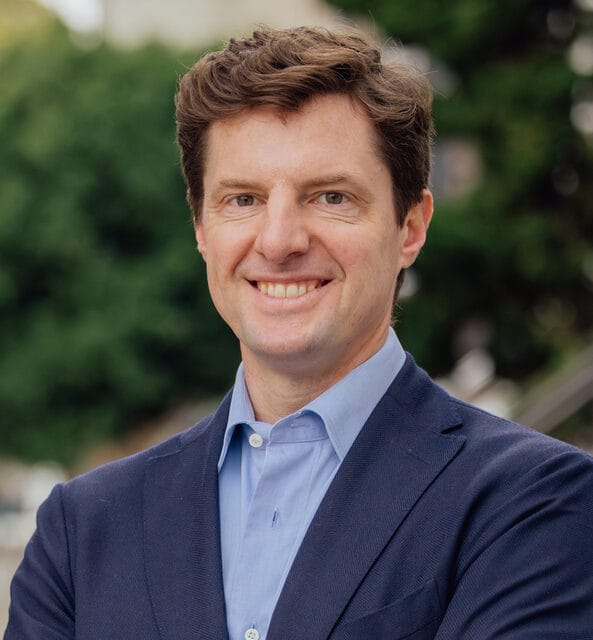
Vote Stephen SherrillWe recommend voting for Stephen Sherrill for Supervisor, District 2.
Sherrill brings real policy experience and a laser focus on responsive, effective government. He served as a senior policy advisor in the Bloomberg administration in New York, led the Mayor's Office of Innovation here, and as Supervisor has cut red tape while focusing on public safety, small businesses, and the cost of living. District 2 agrees: he won 69% of the vote in June, and he faces no serious opposition in November.
Without safe streets, parents won't let their kids walk to school, businesses can't keep their doors open, and people lose faith in the city. Rebuilding that trust starts with visible results like cleaner sidewalks, faster responses when people call for help, and better coordination across city departments to address public drug use and improve street conditions.
Stephen SherrillSupervisor, District 2
Why vote for Stephen Sherrill?
Public safety: Sherrill co-sponsored legislation to speed up 911 responses near schools and parks, co-sponsored Mayor Lurie's RV homelessness legislation, supported the Recovery First ordinance expanding sober housing, and led the city's new free firearm storage program with SFPD.
Small business: Van Ness from City Hall to Broadway has 53% ground-floor vacancy. Sherrill's plan to let stores fill those longtime-vacant spaces passed unanimously, and he helped extend the First Year Free program, which has waived startup fees for over 13,000 small businesses.
Making government work: When he ran the Mayor's Office of Innovation, his team built the technology that finally let San Francisco's nine street outreach teams across four departments share one view of the people they serve: better care, faster service, lower costs. He runs his own office the same way, measuring success by constituent satisfaction and follow-through.
Where Stephen Sherrill stands
| Issue | Stephen Sherrill |
|---|---|
| Supports Mayor Lurie's Family Zoning Plan | Yes |
| Supports building market-rate homes | Yes |
| Fully staff the police department | Yes |
| Improve Muni reliability | Yes |
| Endorsed by Mayor Lurie | Yes |
| Endorsed by SF Democratic Party | Yes |
Sherrill has done a great job as Supervisor, and we're excited to see him keep working alongside Mayor Lurie to get San Francisco back on track. That's why he has our endorsement.
Who's running?
| Candidate | Profession | Questionnaire | |
|---|---|---|---|
Stephen Sherrill史蒂芬‧謝里爾 | Appointed Member, Board of Supervisors | Read it | |
Nicholas Berg盧柏格 | Property Management Executive | Read it | |
Guy McCoy蓋伊‧麥考伊 | Contact information unavailable | ||
Monthanus Ratanapakdee蒙塔努斯‧拉塔納帕迪 | Community Advocate / Mother | No Response |
Supervisor, District 4
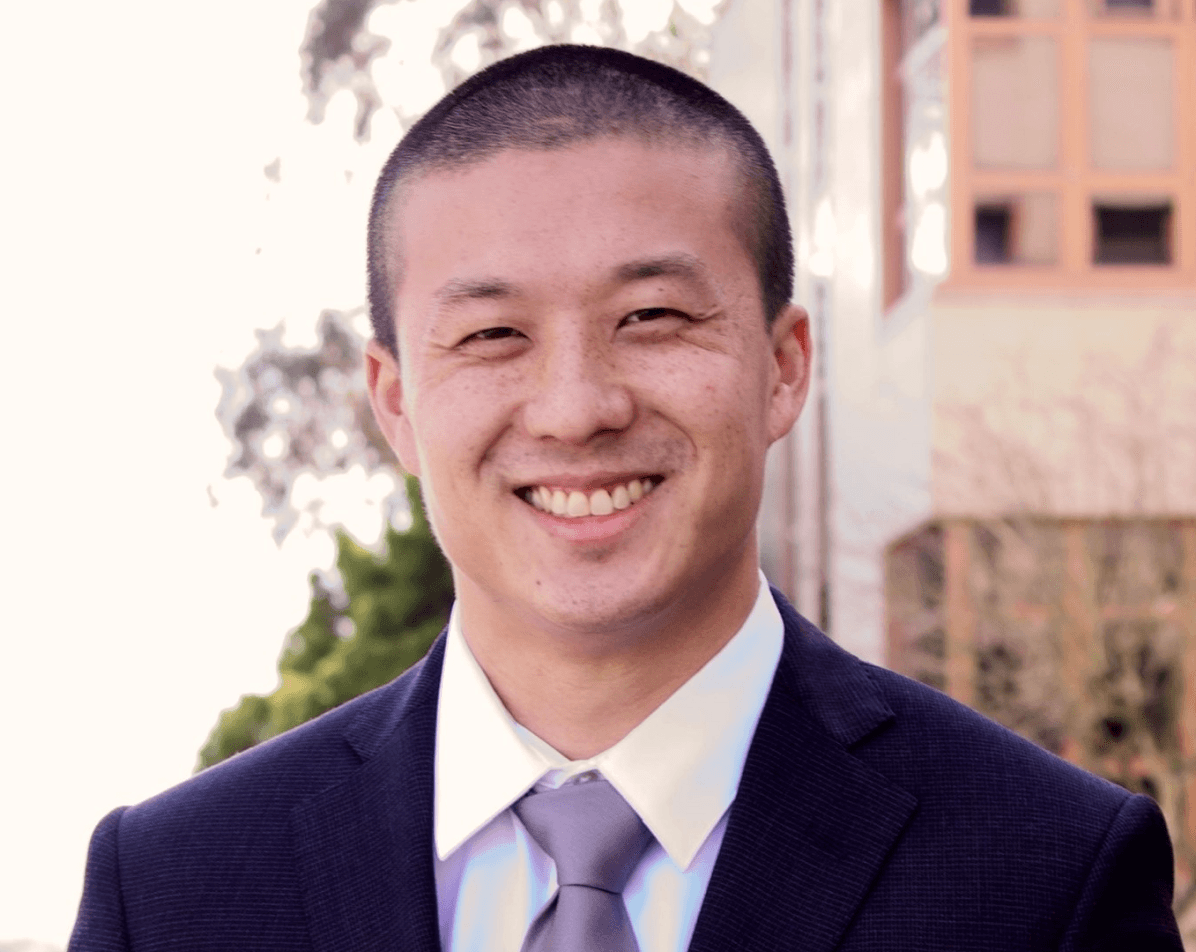
Vote Alan WongWe recommend voting for Alan Wong for Supervisor, District 4.
Wong was appointed by Mayor Lurie in December 2025, chosen from five finalists in an open process, and won the June special election with 46% of first-choice votes in a five-candidate field, nearly double his closest rival, and finished with 64.3% in the final ranked-choice round. He grew up in the Sunset, attended Lincoln High, and came to the job with a long record of public service: labor organizer, legislative aide to a former D4 Supervisor, policy lead at the Children's Council of San Francisco, Community College Board Trustee, and First Lieutenant in the Army National Guard.
The Sunset is the community I love and the only home I've ever known. Serving as Supervisor is the greatest honor of my life. I will approach this work with a public servant's heart. As a veteran, I will always put my community and my country first—above partisanship or ideology.
Alan WongSupervisor, District 4
What he's done in office
In just over half a year, Wong has built the record we hoped for:
- His first vote was for Mayor Lurie's Family Zoning Plan, breaking with the district's anti-density history. He said blocking it risked "losing local control, which is not acceptable."
- He co-sponsored doubling the maximum fine for sideshows after one took over Kirkham and La Playa, matching Oakland's and San Jose's penalties.
- He co-sponsored accepting a $6.25M federal grant that funds 50 police officer positions, a police retention agreement, and Supervisor Dorsey's drug-free supportive housing legislation.
- His office is helping Sunset residents petition SFMTA to convert streets to angled parking, adding spaces without slowing the buses.
The Great Highway
Wong's first act in office was submitting a ballot measure to re-open the Great Highway, reflecting the majority view in his district. It fell one Board signature short. That effort has since been superseded by the citizen-led Great Highway for Everyone Act, which would reopen the road to cars on weekdays while keeping it car-free on weekends. Organizers submitted more than 15,000 signatures in July, well above the roughly 10,600 required to reach the November ballot, and Wong supports the measure.
His priorities for a full term
A fully staffed police force, with recruitment aimed at bilingual officers who speak Cantonese, Mandarin, and Spanish, and desk jobs moved to civilians so sworn officers return to patrol. Responsive government: he dedicates half his staff time to constituent services and commits to answering any constituent concern within 24 hours. And a small business agenda that replaces the "byzantine maze" of permits with a straightforward checklist, plus easier childcare openings and better school information for Sunset families.
Where Alan Wong stands
| Issue | Alan Wong | Albert Chow |
|---|---|---|
| Supports reopening Great Highway | Yes | Yes |
| Supports Mayor Lurie's Family Zoning plan | Yes | No |
| Fully staff the police department | Yes | Yes |
| Arrest and prosecute fentanyl dealers | Yes | No answer |
| Supports tougher penalties for crime (Prop 36) | Yes | No |
| Supports a balanced budget without new taxes | Yes | Mixed |
| Endorsed by Mayor Lurie | Yes | No |
| Endorsed by SF Democratic Party | Yes | No |
District 4 asked for a supervisor who listens, and in eight months Wong has voted their priorities, delivered visible wins, and won their votes once already. That's why he has our endorsement.
Who's running?
| Candidate | Profession | Questionnaire | |
|---|---|---|---|
Alan Wong王兆倫 | Appointed Member, Board of Supervisors | Read it | |
Albert Chow周紹鋆 | Hardware Store Owner | No Response | |
Jeremy Julian Greco傑瑞米‧朱利安‧格雷科 | Campus Coordinator / Monologist | No Response |
Supervisor, District 6
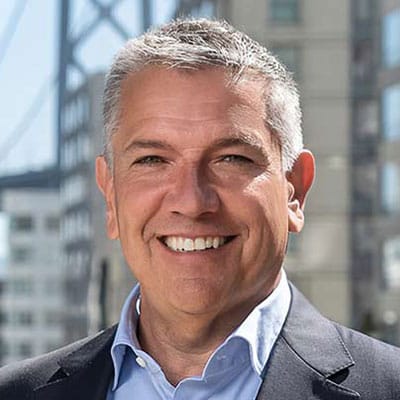
Vote Matt DorseyWe recommend voting for Matt Dorsey for Supervisor, District 6.
We endorsed Dorsey when he first ran in 2022, and he has spent the four years since passing laws to help people get off drugs and into treatment. Before joining the Board he spent 14 years in the City Attorney's office, where he worked on the nine-year legal fight for marriage equality and the lawsuit that saved City College from closure, and later served as SFPD's communications director.
It was my own journey in recovery from addiction that moved me to ask — first Mayor London Breed, and then District 6 voters — for a role on the Board of Supervisors.
Matt DorseySupervisor, District 6
Why vote for Matt Dorsey?
1. Recovery first
Supervisor Dorsey has done more to redirect San Francisco's drug policy toward treatment and recovery than any of his colleagues. His Recovery First ordinance passed the Board unanimously and was signed by Mayor Lurie in May 2025, making long-term remission the official goal of the city's drug programs.
This July, his Drug-Free Housing ordinance passed the Board 7-4, which requires the city to prioritize drug-free options in permanent supportive housing. That's a big change in city policy: today just 42 of the city's roughly 8,500 supportive housing units are drug-free, even though the Health Department reports that 26% of the city's fatal overdoses happened inside supportive housing in 2024, more than died on the street. People in recovery shouldn't be forced to live among drug and alcohol abuse just because they need housing assistance.
He also co-sponsored the RESET Center, which gives people arrested for public drug use an alternative to an ER visit or jail, both connecting people with recovery resources and saving taxpayers money. Dorsey calls it the most important policy shift since the fentanyl crisis began.
2. A fully staffed police force
Dorsey has relentlessly focused on solving SFPD's staffing shortage. The department's own November 2025 staffing analysis counts 1,565 sworn officers against the 2,257 it says the city needs, a gap of 692. His two ballot attempts to close it, in March and November 2024, both failed. He hasn't let up. This year the crisis has finally started to reverse: SFPD received 3,375 applications in 2025, up 40% from the year before, and posted its first net gain in officers since 2020. His second-term plan is a three-year push to full staffing, with civilianized desk jobs putting more sworn officers back on patrol.
3. Safer streets
Dorsey championed bringing speed cameras to San Francisco, and the results came fast: at camera locations, speeding by 10+ mph is down 79% a year after the March 2025 launch, roughly 40,000 fewer speeding drivers a day, and he has introduced a resolution urging the state to let the program expand. He also co-sponsored doubling fines for sideshows.
4. Build more housing
Dorsey voted for Mayor Lurie's Family Zoning Plan, has consistently supported building more homes in every neighborhood, and supports office-to-housing conversions downtown. And we appreciate his economic literacy: he says too-high inclusionary requirements (effectively taxes on new homes to fund subsidized homes) have made projects go "from penciling out to being thrown out."
Where Matt Dorsey stands
| Issue | Matt Dorsey |
|---|---|
| Supports Mayor Lurie's Family Zoning Plan | Yes |
| Fully staff the police department | Yes |
| Arrest and prosecute fentanyl dealers | Yes |
| Supports building market-rate homes | Yes |
| Citywide protected bike lane network | Yes |
| Prioritize buses with bus-only lanes | Yes |
On other issues
Downtown recovery: As the downtown supervisor, he backs Vacant to Vibrant, Downtown First Thursdays, and tax and permitting changes to refill offices and storefronts. He wants to get office vacancy under 20% by 2030, down from a record 36.9% in late 2024. And his West SoMa Entertainment Zone ordinance, which passed in December 2025 and launched this July, lets bars and restaurants across a wide stretch of SoMa sell drinks to go.
Mental health: He supports expanding conservatorship tools and wants San Francisco to work with neighboring counties on regional mental health treatment centers, because streets and jails are the two worst places to leave someone in crisis.
Who's running?
| Candidate | Profession | Questionnaire | |
|---|---|---|---|
Matt Dorsey麥德誠 | San Francisco Supervisor | Read it | |
Alex Behrend亞歷克斯‧貝倫德 | Laborer / Community Organizer | No Response |
Supervisor, District 8
Vote Emanuel "Manny" YekutielWe recommend voting for Manny Yekutiel for Supervisor, District 8.
You could argue that Manny is already doing the job of Supervisor: organizing trash clean-ups, organizing street festivals, advocating for small businesses and residents, and bringing more joy to the district.
He does most of that through the Civic Joy Fund, which he co-founded with Daniel Lurie (back before he became Mayor) and which pays for 17 trash pickups a week, night markets, and public art across the city. He has also served in important roles on the Small Business Commission and the SFMTA Board of Directors where he spent nearly three years voting on Muni service, street redesigns, and the agency's budget. But you may know him from his cafe and civic gathering space, Manny's, at 16th and Valencia. He turned a vision of community and conversation into a thriving small business where leaders, authors, and artists flock to from around the world. Running his cafe and leading the Valencia Corridor Merchants Association taught him what it costs, in fees and in patience, to keep a small business open in San Francisco.
If I had to choose just one metric, it would be the number of new homes actually built.
Manny YekutielCivic Joy Fund Co-Founder
Why vote for Manny Yekutiel?
1. Build 10,000 homes
Manny has the most ambitious housing agenda in this race: 10,000 new homes in District 8 within eight years. For reference, the district built just 1,212 new homes from 2015 through 2024. He will achieve this by enacting a "housing priority district" on Market Street from Castro to Octavia that strips away barriers to building new homes, which he expects to result in about 6,000 homes. Another 3,000 will come from larger sites and 1,000 from ADUs. He wants guaranteed approvals for code-compliant projects and called Mayor Lurie's Family Zoning Plan a great first step. He answered our questions like someone who has actually read the economic research.
2. Safety and treatment
He supports full SFPD staffing, civilianizing desk roles so sworn officers patrol, and regular day and night beat cops on the Castro, 24th Street, and the district's plazas. On drugs, his positions match ours: arrest and prosecute fentanyl dealers and their suppliers, end the distribution of pipes and other paraphernalia without legitimate public health benefits, and expand sober housing and treatment capacity so every enforcement contact comes with a real offer of care. He also wants the Department of Public Health empowered to treat people in mental health crisis rather than waiting for a court order.
3. Free and easy to run a small business
His small business platform is straightforward: "It should be free and easy to start and run a small business in the City." He would make a willing landlord the only approval most businesses need, whether that is a salon, a corner grocery, a restaurant, or a neighborhood office, and would end the Planning Commission hearings that a bar taking over an empty restaurant still has to sit through. He would also reduce or eliminate the annual fees that cost small operators thousands, and simplify permits for basic storefront work. His goal is to fill every vacant storefront in the district within four years.
Where Manny Yekutiel stands
| Issue | Manny Yekutiel | Gary McCoy |
|---|---|---|
| Supports Mayor Lurie's Family Zoning Plan | Yes | Yes |
| Supports building market-rate homes | Yes | No answer |
| Fully staff the police department | Yes | No answer |
| Arrest and prosecute fentanyl dealers | Yes | No answer |
| Supports drug-free supportive housing | Yes | No answer |
| Supports safe consumption sites | No | Yes |
McCoy refused to answer our questionnaire, so his positions above come from his campaign platform and press coverage of him. He dismissed the questionnaire, which asks candidates about specific policies, as a "litmus test." We think Gary McCoy's refusal to answer basic questions about his positions on housing, policing, and drug policy is disqualifying and disrespectful to voters.
On other issues
Homelessness: Yekutiel's goal is zero unsheltered homelessness through more shelter, transitional housing, and tiny cabin villages, paired with accountability and enforcement to keep streets clean and safe.
Transit: He backs bus-only lanes with real enforcement, a citywide protected bike lane network, and Vision Zero, while pushing Muni to earn the trust of riders with service that is safe, fast, and reliable.
Manny Yekutiel has spent a decade building things in this city: a business, a civic institution, street festivals, night markets, and cleaner streets. We can't wait to see what he can do as Supervisor.
Who's running?
| Candidate | Profession | Questionnaire | |
|---|---|---|---|
Emanuel "Manny" Yekutiel伊曼紐爾‧「曼尼」‧耶庫蒂爾 | Small Business Owner | Read it | |
Gary McCoy麥佳禮 | Healthcare Policy Advocate | Refused | |
Michael T. Nguyen阮忠誠 | Attorney / Drag Producer | No Response | |
Darshini Patel達希妮‧帕特爾 | Community Advocate | Refused |
Supervisor, District 10
Vote Theo EllingtonWe recommend voting for Theo Ellington for Supervisor, District 10.
Ellington has spent more than fifteen years working on District 10's problems. As a City Commissioner at the Office of Community Investment and Infrastructure, he oversaw the redevelopment plans for the Shipyard, Mission Bay, and Transbay. As the Warriors' Director of Public Affairs, he managed the Chase Center partnership that delivered 3,000 jobs. As homelessness director at the Salvation Army, he built a 50-bed mental health respite center and recovery housing. Today he runs the Bayview Opera House.
I'm not running to study these problems. I'm running to solve them.
Theo EllingtonBayview Opera House Director
GrowSF didn't exist yet when Theo ran for Supervisor the last time, but our co-founder endorsed Ellington in 2018 as the most pro-housing candidate in that race. Eight years later, he still is.
Why vote for Theo Ellington?
1. Get the 20,000 homes built
District 10 has roughly 20,000 homes approved but unbuilt. They're stuck in the "planning pipeline" at Pier 70, the Potrero Power Station, India Basin, the Hunters Point Shipyard, Candlestick Point, and the former Schlage Lock factory, and Bayview's Third Street corridor has not seen a new home built in over a decade.
Ellington's number one commitment is turning that pipeline into actual homes. "Not approved. Not entitled. Built," as he put it in our questionnaire. He wants public timelines with consequences for developers who get approval and don't build. At Candlestick Point, where the Board approved the final map in June and infrastructure work finally breaks ground this summer after more than a decade of delay, he says that if the project stalls again the city should enforce penalties and look at recapturing or reassigning the land.
He supports letting small apartment buildings up to six stories be built with one staircase instead of two to make them cheaper to build, setting fees at levels that maximize homebuilding, and negotiating local hiring and community benefits up front instead of letting them become excuses to block development. He also wants round two of the Family Zoning Plan to include District 10, which was left out of the first round, and to add housing capacity along Third Street, Evans, and 16th Street.
2. Public safety
District 10 has the highest gun violence rate in the city, and for Ellington it's personal: his 13-year-old cousin was shot and killed in Bayview. He wants both enforcement and prevention. He supports full SFPD staffing and consistent foot patrols on commercial corridors, which the district does not have today. Unlike his opponent DJ Brookter, Theo Ellington supports arresting and prosecuting fentanyl dealers and the leaders of theft rings. And he wants violence prevention and youth programs fully funded, with D10-specific response times, clearance rates, and trust metrics published so residents can see it's working.
3. Finish the Shipyard cleanup
Decades of power plants, freeways, and contaminated Shipyard land have left Bayview-Hunters Point with some of the city's highest rates of cancer and asthma. This hit Ellington's family personally. After he and his wife bought a home at the Shipyard, they learned the soil was not safe, because the contractor hired to certify it had lied. The Ellingtons were one of the two families who brought the 2018 case, which won a $6.3M settlement from the developers for failing to warn buyers. Claims against the contractor itself ended on August 4, 2026, when a federal judge ruled that a nuclear-liability law bars homeowners from recovering for lost property value. As Supervisor he wants full retesting of the fraudulently certified parcels with independent oversight, a proper clean up, permanent public air-quality monitors in Bayview and Visitacion Valley, and real enforcement against illegal dumping.
4. Treatment that leads somewhere
At the Salvation Army, Ellington built the kind of recovery infrastructure the city keeps saying it needs: a 50-bed mental health respite center and recovery-based transitional housing. His rule is simple: never release someone from treatment back onto the street without a stable next step. He would end the distribution of pipes and foil while keeping evidence-backed public health interventions like clean needles, and he supports citations for public drug use paired with a treatment offer at every point of contact.
Where the candidates stand
| Issue | Theo Ellington | DJ Brookter | J.R. Eppler |
|---|---|---|---|
| Fully staff SFPD | Yes | Yes | Yes |
| Arrest and prosecute fentanyl dealers | Yes | No | Yes |
| Prosecute leaders of theft and fencing rings | Yes | No | Yes |
| CEQA exemption for market-rate housing | Yes | No | No |
| Supports state law to speed up home building | Yes | No answer | No |
| Has opposed housing in the district | No | None found | Yes, twice |
On other issues
Transit: He wants the T-Third running every 10 minutes at peak with signal priority, a fix for the Islais Creek Bridge closure, restored late-night service for workers, and an additional Caltrain station with expanded water transit. He is honest that Bayview and Visitacion Valley remain car-dependent, and says bike infrastructure should be built where it genuinely connects people to destinations rather than as a blanket mandate.
Small business: His plan for Third Street and Evans includes guaranteed permits for code-compliant businesses, letting multiple small businesses share storefronts, pop-ups in vacant spaces, and a District 10 Small Business Investment Fund. As he told us, "Opening a business should not feel harder than running one."
Why not the other candidates?
J.R. Eppler is trying to sell himself as a pro-housing candidate, but his record tells the real story. As president of the Potrero Boosters he appealed a 127-home building at 88 Arkansas on a unit-mix technicality the Board of Appeals rejected 4-0. He opposed 450 homes at 300 De Haro, objecting that the project used state pro-housing law. He would also exempt shelters and affordable housing from CEQA but not market-rate housing, which leaves the appeals process intact for most of what District 10 needs. In a district with 20,000 approved but unbuilt homes, a supervisor who supports housing in principle and appeals it in practice is the wrong fit.
Who's running?
| Candidate | Profession | Questionnaire | |
|---|---|---|---|
Theo Ellington艾霖敦 | Public Policy Director | Read it | |
Dionjay (DJ) Brookter迪昂傑‧(DJ)‧布魯克特 | Community Organizer | Read it | |
Deandra Bryant蒂安德拉‧布萊恩特 | Housing Advocate | Read it | |
J.R. EpplerJ.R.‧埃普勒 | Small Business Attorney | Read it | |
Pearci "PJ" Bastiany, III皮爾斯‧「PJ」‧巴斯蒂亞尼三世 | MPA Graduate Student | Read it | |
Ellsworth "Ell" Jennison, Jr小埃爾斯沃思‧「埃爾」‧M‧詹尼森 | Union Carpenter | Contact information unavailable | |
Mike Trouble Lin林育仁 | Small Business Consultant | Read it | |
Jamo Muhammad傑莫‧穆罕默德 | Father | Contact information unavailable | |
Jessica Pessecow潔西卡‧佩塞考 | Nurse / Legal Representative | Contact information unavailable | |
Shawn M. Richard肖恩‧M‧理查德 | Read it |
SF Ballot Measures
Yes on Proposition A
Charter Changes Affecting Various City Departments and Commissions
What is it?
Prop A is a cleanup measure for San Francisco's boards and commissions. It consolidates duplicative commissions, shuts down outdated and unused commissions, and moves 9 others out of the Charter so the Board of Supervisors can change them without another ballot measure.
Fewer commissions
Prop A reduces the number of boards and commissions in the City Charter from 55 to 38, by moving 9 into the Municipal Code and eliminating or merging 8 others.
Boards and commissions with overlapping duties are merged into one.
Commissions that have sat idle for years are eliminated, like the Special Strike Committee, which a state labor board ruled can no longer legally convene. So are commissions that still meet but no longer serve a purpose, like the Sanitation and Streets Commission, which oversees a department that no longer exists.
The 9 commissions that move into the Municipal Code, like the Human Services Commission, keep operating as they do today, but the Board could later change or dissolve them by ordinance instead of by ballot measure.
Finally, Prop A repeats this review every ten years: starting in 2035, the City must convene a new Commission Streamlining Task Force to go through every board and commission again, so the Board of Supervisors can keep the count down and close any that have stopped serving a purpose.
History
Prop A is the outcome of 2024's Prop E, which created the Commission Streamlining Task Force. The task force assembled the city's first full list of all commissions, studied their duties, outcomes, and impacts, and ultimately made a set of recommendations to the Board of Supervisors. The task force recommended many more changes than the Board of Supervisors ultimately adopted, but the Board voted to place their pared-down measure on the ballot.
The task force recommended shrinking the number of boards and commissions to 87 (plus 41 not in scope of their work) by eliminating 36 inactive bodies, merging 2 duplicative bodies, and eliminating 24 active bodies that were no longer needed. Ultimately, it would have shrunk the number or Chartered bodies from 55 to 24, and administrative code bodies from 76 to 63.
Read the full annotated legal text →
Click to show fiscal impacts and more detailsCollapse details
Fiscal impacts
According to the Controller's Office, Prop A would save $365,000 to $450,000 per year. The savings come from eliminating the Sanitation and Streets Commission, the Public Works Commission, and the Street Artists and Craftsmen Examiners Advisory Committee. The two commissions shared two full-time staff at a cost of $336,000 per year.
Other costs and savings depend on choices the Mayor and Board of Supervisors make in the normal budget process. Removing the ban on paying Youth Commission members could cost $5,000 to $85,000 per year if the City chooses to pay them. Stipends at other bodies range from $25 to $500 per meeting, or $100 to $500 per month. The Controller could not estimate the savings from dropping the executive secretary requirement, because some bodies may leave the position unfilled.
Convening the Commission Streamlining Task Force every ten years would take staff time. The 2025 task force required about 5,900 hours.
Why is this on the ballot?
The Charter can only be changed by a vote of the people. The Board of Supervisors voted 9-2 on July 14, 2026 to place this amendment on the November 3, 2026 ballot (File No. 260536).
This is a City Charter amendment introduced by the Board of Supervisors. Since the Board of Supervisors cannot directly amend the Charter, if they want to change the Charter they must go to the voters. A vote of six or more Supervisors is required to place a Charter Amendment on the ballot, and voters must approve it by a 50% + 1 majority.
- Placed on ballot by: The Board of Supervisors, by a 9-2 vote on July 14, 2026. Ayes: Chen, Dorsey, Mahmood, Mandelman, Melgar, Sauter, Sherrill, Walton, and Wong. Noes: Chan and Fielder.
- Sponsors: Supervisors Mandelman, Mahmood, Melgar, Sherrill, and Dorsey
Why vote Yes?
Prop A is a common-sense solution to an obvious problem: City Hall has too much bureaucracy that slows everything down. Complex organizations with tens of thousands of employees need Directly Responsible Individuals who can be held accountable for failures. The ultimate Directly Responsible Individual is the Mayor, and voters decide if he or she has done a good job. But currently the Mayor lacks the power to hold individuals accountable in many departments because they are shielded by commissions that don't answer to the Mayor. What we get instead is diffusion of responsibility, chaos, and failure. Prop A fixes that.
A San Francisco Civil Grand Jury report counted 152 commissions cluttering City Hall. Every commission and unaccountable layer of bureaucracy blurs responsibility, so when something fails nobody is responsible and nothing is fixed. Two decades of well-intentioned but poorly executed ballot measures built this broken system, and it's time to fix it.
Prop A restores a functional chain of command so that individuals are clearly responsible for success or failure. Departments will answer to elected individuals, not unelected commissioners, so voters can actually hold them accountable. Every link in the chain of command will now end with you. Vote yes on Prop A.
No on Proposition B
Establishing a Municipal Finance Corporation and a Public Bank
What is it?
Prop B would authorize SF to create a City-owned Municipal Finance Corporation (MFC) now, and a Public Bank later. It provides no money for either one. The MFC would only be created if the Treasurer-Tax Collector determines there is enough funding and the City secures the capital it requires. The Public Bank would only be created after the MFC has been running for at least three years and obtains state and federal regulatory approval.
The MFC would be able to lend money to the City, nonprofits, and private businesses for affordable housing, homeownership, small business, and environmental projects. The Public Bank would do the same, but could also hold deposits.
Both bodies are not allowed to invest in "predatory lending, fossil fuels, tobacco, weapons, prisons, and businesses that break labor law." It does not define any of these terms, so the commissions would decide what counts.
Governance
Each institution gets a public oversight commission and a corporate board, and the corporate boards, not the City, will run daily operations. The Board of Supervisors appoints four of the nine commission seats, more than any other branch or elected official. The Mayor appoints two, and the Treasurer-Tax Collector, Controller, and City Attorney one each. That commission, in turn, appoints the corporate board that runs the bank. Current and recent politicians are not eligible for the commission.
Read the full annotated legal text →
Click to show fiscal impacts and more detailsCollapse details
Fiscal impacts
The measure does not appropriate money or set a capitalization amount; establishing the MFC is contingent on the City separately securing funding.
According to the Controller's Office, Prop B would not directly change the cost of government, because it does not require the City to create the corporation. If the City does build one, and later a public bank, the Controller estimates $310M to $460M over eight years, using 2023 Reinvestment Working Group figures: roughly $4M per year to set up the corporation, $90M to capitalize and fund it over three years, about $220M to run the bank across years four through eight, and $550,000 to $600,000 per year for an oversight commission. The Controller notes the capitalization and funding could come from City grants and forgivable loans, which are unlikely to be repaid.
The Controller cautions the real figure could be significantly higher or lower, and warns of potentially significant unforeseen costs if the bank is not financially sustainable. Because the measure gives the oversight commission and board a high degree of independence, the City would have limited control over the outcome.
Why is this on the ballot?
The Board of Supervisors voted 9-2 on July 7, 2026 to place this charter amendment on the November 3, 2026 ballot (File No. 260535).
This is a City Charter amendment introduced by the Board of Supervisors. Since the Board of Supervisors cannot directly amend the Charter, if they want to change the Charter they must go to the voters. A vote of six or more Supervisors is required to place a Charter Amendment on the ballot, and voters must approve it by a 50% + 1 majority.
- Sponsors: Supervisor Chen; co-sponsored by Supervisors Fielder, Melgar, Mahmood, and Walton
- Placed on ballot by: Supervisors Chan, Chen, Dorsey, Fielder, Mahmood, Mandelman, Melgar, Sauter, and Walton (Ayes); Supervisors Sherrill and Wong voted No
Why vote No?
San Francisco does not need a public bank, especially when the law creating it, Prop B, is riddled with errors.
You should vote against Prop B on the merits. Not only will it fail to solve the problems it claims exist, it requires FDIC deposit insurance, which the Bank of North Dakota does not have and which the FDIC will not grant a government-owned bank, and it exempts the bank's overseers from San Francisco's Sunshine Ordinance. If this were a more modest proposal to, for example, provide advantageous financing for infrastructure and construction projects, then we would be more sympathetic. But its ultimate goal is to hold taxpayer money in a bank where City Hall picks everyone who picks the bankers.
One central tenet of the public bank is to move the City's money "out of Wall Street," but this claim doesn't survive contact with reality. The City's roughly $17 billion in cash isn't sitting in a Wall Street vault or invested in risky stocks; the Treasurer invests it mostly in safe U.S. Treasury and federal agency securities.
It also has a fundamental internal contradiction: it cites the Bank of North Dakota as an example of a successful public bank while banning San Francisco from one of that bank's signature lending lines: fossil fuels. Prop B conveniently ignores the fact that the Bank of North Dakota is a significant energy lender, including oil and gas, at about 9% of its loan book. The bank's S&P rating notes its "substantial concentrations relative to most rated U.S. banks, including" energy and agricultural lending. North Dakota is so committed to its oil industry that it sued the federal government over the costs of policing the Dakota Access Pipeline (DAPL) protests, and won a $28 million settlement.
Here are a few more inaccurate claims in the measure:
Claim: The Municipal Finance Corporation can become a Public Bank once it "seek[s] all necessary regulatory approvals."
Verdict: Blocked by the FDIC.
Reality: State law requires a public bank to obtain FDIC deposit insurance, and no government-owned bank in America has it. The Bank of North Dakota is not an FDIC member; its deposits are guaranteed by state taxpayers instead. The FDIC has told American Samoa it will not insure its territorial bank unless the government sells it. A bank owned by the City of San Francisco would face the same answer.
Claim: "Existing financial institutions have historically failed [...] to provide adequate lending products to serve the unmet financing needs for affordable housing."
Verdict: Misleading.
Reality: Banks are the main private funder of subsidized housing, supplying about 80% of low-income housing tax credit equity nationally. They do it largely because the Community Reinvestment Act pushes them to invest where they take deposits, which is why CRA-motivated banks bid credit prices up in big cities and leave "CRA deserts" in rural areas. San Francisco is no desert. What stalls projects here is a shortage of subsidy, not lenders: San Francisco Planning counts a gap-funding backlog of more than $1B for affordable projects that are already approved, and a 199-home senior project in the Outer Sunset paused this year for lack of gap funding, not for lack of a loan. A public bank makes loans that must be paid back; it cannot fill a subsidy gap. Subsidy is what Prop C provides.
Claim: The City's deposits would give the bank money to lend out.
Verdict: False.
Reality: California requires banks holding government deposits to pledge collateral worth 110% of every dollar deposited. City deposits wouldn't free up capital to lend; they'd consume it. Even the Public Banking Institute's legal advisor calls the collateral rules "really a killer."
Claim: "Public banking has a long history of success supporting equitable economic development internationally and domestically"
Verdict: False.
Reality: The most cited study of the question, Government Ownership of Banks by La Porta, Lopez-de-Silanes, and Shleifer, found the opposite: government ownership of banks was associated with slower financial development and slower growth in per capita income. Domestically, there are only two public banks: North Dakota, opened in 1919, and American Samoa, opened in 2016.
Claim: "one quarter of the world's assets [are] currently held in public banks"
Verdict: False.
Reality: The true number is closer to 10%, or under 5% if you exclude the Chinese Communist Party's state-run banks. The "one quarter" claim traces to academic research counting roughly 900 public banks holding just under $49 trillion, the same figure the Public Banking Institute promotes. That is close to a quarter of global banking assets, which notably excludes assets like land, buildings, machinery, infrastructure, companies, etc. The Financial Stability Board estimated $256.8 trillion in non-bank financial assets as of 2024, and puts that at 51% of all global financial assets, which would place public banks closer to a tenth of global financial assets. The four largest banks in the world are all Chinese state-owned lenders: Industrial and Commercial Bank of China, Agricultural Bank of China, China Construction Bank, and Bank of China. They hold about $25.5 trillion between them, roughly half the $49 trillion held in public banks globally. The figure is not evidence about community-reinvestment municipal banking. It is mostly a fact about the Chinese Communist Party state-run banking system.
And after all these errors, remember what Prop B actually provides toward building a bank: nothing. Its own text concedes the corporation "cannot be established unless the City secures the required capitalization," and the tax that would have supplied the money was withdrawn in March. San Francisco is facing a $643M two-year deficit, and the Controller prices the corporation and bank at $310M to $460M over eight years. Let's at least get our own finances in order before trying to run a bank. Vote no on Prop B.
Yes on Proposition C
Contributions to the Housing Fund
What is it?
Prop C will increase the City's investment in its Housing Trust Fund, which funds below-market-rate home construction, preservation, and acquisition as well as infrastructure and some downpayment assistance. Voters first created the fund in 2012.
Today, the City puts $50.8M into the Housing Trust Fund every year. This measure would increase that yearly contribution starting in Fiscal Year 2028-29 until it hits $125M per year, in line with either the growth of general fund revenues or property values, whichever rises faster. When the yearly appropriation hits $125M, the contribution growth is capped at 3% per year.
The Board of Supervisors may freeze contributions when the City projects a deficit over $250M, and cut contributions by up to 10% in a year the City taps its Rainy Day Reserve.
The measure also raises the income cap for downpayment assistance loans from 120% to 200% of the Area Median Income and removes the current spending cap on housing-related infrastructure.
Read the full annotated legal text →
Click to show fiscal impacts and more detailsCollapse details
Fiscal impacts
According to the Controller's Office, Prop C would have a significant impact on the cost of government. It would add about $6M in General Fund costs starting in FY 2028-29, growing to about $60M per year by FY 2034-35, when the annual contribution reaches $125M. It also extends the mandate by fifteen years, from 2043 to 2058.
For comparison, the City put about $50M into the fund in FY 2024-25, and without the measure the formula would require about $65M in FY 2034-35. Those projections assume the City does not use the measure's freeze and reduction provisions.
The Controller notes the measure does not comply with a non-binding, voter-adopted City policy that seeks to limit General Fund spending mandates. Those mandates already total about $2B, or 30% of the roughly $7B in General Fund sources.
Why is this on the ballot?
The Housing Trust Fund lives in the City Charter, and only voters can change the Charter. The Board of Supervisors voted 11-0 on July 14, 2026 to put this amendment on the ballot (File No. 260537).
This is a City Charter amendment introduced by the Board of Supervisors. Since the Board of Supervisors cannot directly amend the Charter, if they want to change the Charter they must go to the voters. A vote of six or more Supervisors is required to place a Charter Amendment on the ballot, and voters must approve it by a 50% + 1 majority.
- Placed on ballot by: The Board of Supervisors, by a unanimous 11-0 vote on July 14, 2026.
- Sponsors: Supervisors Melgar, Walton, Sauter, Sherrill, Dorsey, Wong, Mahmood, Mandelman, Fielder, and Chen.
Why vote Yes?
San Francisco currently pays for subsidized low-income homes (often misleadingly called "affordable homes") by taxing the construction of new homes. The tax is called inclusionary housing: builders must rent or sell a share of the homes in every new building below market, or pay a fee instead, and that loss comes out of the project just as a tax would. New UC Irvine research found that these taxation schemes cut new home construction by nearly a third. And since subsidized low-income homes only get built when the regular market-rate projects around them do, the tax suppresses both kinds.
The current tax scheme raises rents for everyone. Adding up the higher rents everyone pays because of that lost housing, each subsidized low-income home the policy produces costs renters about $800,000. Building one directly, without this tax, only costs about $441,000.
In May 2026, Supervisor Melgar and Mayor Lurie made a deal with the nonprofits who build low-income housing: the nonprofits would stop fighting a cut to the tax, and in exchange the City would grow the Housing Trust Fund. The Board delivered the first half on July 14, 2026, when it cut the tax from 15% to 5%. Prop C is the second half.
We think this is a good deal, and Prop C is how voters keep the City's end of it. The lower tax is what makes every kind of home cheaper to build, which puts downward pressure on rents across the city. The bigger fund replaces the subsidy the tax used to squeeze out of builders, and it does so the cheap way, by paying for homes directly instead of through lost housing. Strictly speaking, the cut is already law and does not depend on Prop C. But the nonprofits stood down on the strength of this fund, and if voters reject it, the fight over the rate starts right back up.
We typically oppose set-asides, but this one is built well: growth caps at 3% per year once the fund reaches $125M, and the Board can freeze or trim contributions in bad budget years.
Yes on Proposition D
Changes to Ballot Measure Process
What is it?
Prop D is designed to reduce the number of local ballot measures San Franciscans vote on by:
- Raising the signature threshold for citizen initiative ordinances (new laws that reach the ballot by signature drive instead of through the Board of Supervisors) from 2% to 8% of registered voters, or about 42,500 signatures instead of 10,600, still below Oakland's 10% and Los Angeles's 15%
- Making it harder to force a special election. An initiative normally waits for the next scheduled election, but with enough signatures its backers can demand a standalone election, which costs the City at least $5 million. The requirement stays at 10%, but Prop D measures it against registered voters instead of votes cast for Mayor, so the bar rises from about 39,000 signatures to about 53,100.
- Removing the Mayor's ability to unilaterally put a measure on the ballot
- Requiring a Board majority, six supervisors instead of four, to place a measure on the ballot
Today a citizen initiative cannot be pulled off the ballot once its signatures are in, even if the sponsors changed their minds. Prop D lets all of a measure's proponents together withdraw it up to 102 days before the election. California gave statewide proponents a similar option in 2014.
Compared to other cities
| City | Percentage |
|---|---|
| San Francisco (current) | 2% of registered voters |
| San Francisco (proposed) | 8% of registered voters |
| Oakland | 10% of registered voters |
| Los Angeles | 15% of votes cast for Mayor (appx. 6.3% of registered voters) |
| San Diego | 10% of registered voters |
| San Jose | 5% of registered voters |
| Anaheim, Bakersfield, Fresno, Long Beach, Sacramento | 10% of registered voters |
Read the full annotated legal text →
Click to show fiscal impacts and more detailsCollapse details
Fiscal impacts
According to the Controller's Office, Prop D would have a minimal impact on the cost of government, and would likely reduce costs by an amount that cannot be determined at this time.
Why is this on the ballot?
Citizens may introduce charter amendments by collecting signatures from at least 10% of the registered voters in the City. The amendment must then be approved by voters with a simple majority of 50% + 1.
- Placed on ballot by: Initiative petition. Supporters submitted 80,100 signatures; the Department of Elections certified on July 23, 2026 that the petition exceeded the 53,076 valid signatures required.
- Proponent: Peter Leoni is the proponent named in the certification. The signature drive was funded by Clean Up City Hall, Mayor Daniel Lurie's ballot measure committee, which gathered signatures for three charter amendments including this one.
Why vote Yes?
San Francisco is forced to vote on too many ballot measures. This year we have 10, in 2024 and 2022 we had 15, and in 2016 we voted on 24!
Meanwhile, Oakland voted on just three in 2024.
The problem is that San Francisco has the lowest number of required signatures in the state to put a measure on the ballot: just 2% of voters. Our peer cities range from 5% to 10%. Since it's so easy to run a ballot measure, the ballot has become an easy way for a small group of special interests to enact a law that can never be changed by our elected Board of Supervisors. Laws that are not easy to fix should not be this easy to enact.
Beyond just shortening the ballot, we also like that it ends the ability of a minority of Supervisors to place a measure directly on the ballot and the ability for the Mayor to unilaterally place measures on the ballot. This will end the practice of using the ballot as a backstop to pass bad laws. Now our elected leaders will actually need a majority to enact new laws!
Vote yes on Prop D to shorten your ballot.
Yes on Proposition E
City Administrator's Authority and Changes to City Contracting
What is it?
Prop E changes city contracting rules and the City Administrator's role in them. It would centralize procurement authority in the City Administrator, who is appointed by the Mayor and confirmed by the Board of Supervisors.
Procurement rules control how the city buys goods and services, contracts for public works, and makes grants, but not union contracts, development agreements, or real estate.
Several of the changes are consolidations of existing law, but a few would shift how contracting decisions get made:
- The City Administrator would become the only official who can introduce most purchasing legislation. Either the Board of Supervisors (by majority vote) or the Mayor (by written notice) could reject a proposed ordinance within 60 days; otherwise it becomes law automatically. The Board could not amend it, and could not override the Mayor's rejection
- The Board of Supervisors will be less involved: Only revenue contracts and leases of $4.5M or more (up from $1M) and spending contracts of $25M or more (up from $10M) would need Board approval. (This will adjust for inflation starting in 2032)
- Purchasing at the MTA, PUC, Airport, Port, and the City's charitable trust departments would become subject to standards set by the City Administrator
- The City Administrator's term would go from five to ten years
Read the full annotated legal text →
Click to show fiscal impacts and more detailsCollapse details
Fiscal impacts
According to the Controller's Office, Prop E would have a minimal impact on the cost of government, at a level that cannot be determined at this time.
The Controller says giving the City Administrator authority to set contracting rules establishes a more unified purchasing approach, which may lower the cost of goods and services and save staff time over the long run. Raising the Board of Supervisors' approval thresholds may cut the time the Board and department staff spend preparing for and holding contract reviews.
The measure may change staffing, but it does not specify any organizational or staffing changes.
Why is this on the ballot?
This is a citizen initiative that qualified by signature petition. Supporters submitted 82,420 signatures, more than the 53,076 valid signatures required, and the Department of Elections certified it for the ballot on July 23, 2026.
Citizens may introduce charter amendments by collecting signatures from at least 10% of the registered voters in the City. The amendment must then be approved by voters with a simple majority of 50% + 1.
- Placed on ballot by: Voter signature petition.
- Proponent: Peter Leoni, per the certification letter.
Why vote Yes?
San Francisco's tangled purchasing rules gave us the $1.7M toilet: a cheaper prefab model existed, but a City rule banned buying it from Nevada. That rule, which barred contracting with companies from 30 states, forced City departments to file 538 waivers in a single year, and it took seven years before the Board admitted failure and repealed it. Meanwhile, buying anything through City Hall still takes about $25,000 of process, six to twelve months, and up to 14 departments, under rules scattered across more than 100 sections of code. Nobody is in charge of the rules, so nobody can fix them.
Prop E puts one person in charge: The City Administrator will write one purchasing rulebook, every department will follow it, and either the Board of Supervisors or the Mayor can reject bad rules.
A 2024 law that simplified purchasing for small projects shows that better rules lead to better outcomes. Rec and Park says the new method cuts playground delivery from several years to 12 to 18 months, and its first project, Bernal Heights Playground, was renewed for $1.3M.
Vote yes on Prop E.
Yes on Proposition F
Changes to Executive Branch Management
What is it?
Prop F gives the Mayor more direct control over City government, while letting the Board of Supervisors block some of the changes. It makes three major changes.
-
The Mayor could reorganize most City departments. Today, many departments and their duties are written into the City Charter, so moving or merging them takes a citywide vote. Prop F would let the Mayor move duties between departments or merge whole departments. A reorganization takes effect unless the Board of Supervisors votes to block it within 30 days, or 60 days if an ordinance is needed to carry it out. Charter duties could move to another department but not be eliminated. Some departments are off limits: the Controller, City Administrator, Board of Appeals, Port, Airport, the Asian Art and Fine Arts Museums, and the police and sheriff oversight bodies.
-
The Mayor could directly hire and fire more department heads. Today, for most departments, an unelected commission gives the Mayor a list of at least three candidates for department head, and the commission can fire whoever gets the job. (The Police Chief is a partial exception: the Police Commission assembles the list, but the Mayor can already remove the Chief without it.) Prop F gives the Mayor direct hire and fire authority over the heads of Planning, Building Inspection, Public Works, Homelessness and Supportive Housing, Small Business, and Entertainment. For most other departments the commission still supplies candidates, though its list can shrink to a single name, and the Mayor, not the commission, could remove the department head. The Municipal Transportation Agency and the Public Utilities Commission follow that pattern, with the Mayor also approving the department head's contract and setting the pay.
-
Most commissioners could be removed by whoever appointed them. Today, removing a commissioner from most major commissions takes written charges, an Ethics Commission hearing, and a three-fourths vote of the Board of Supervisors. Under Prop F, most commissioners would serve at the pleasure of whoever appointed them: the Mayor could remove the Mayor's appointees, and the Board could remove the Board's. The Board of Appeals, Civil Service Commission, and Ethics Commission keep the current process.
Prop F also deletes a 1990s-era ban on the Mayor hiring "deputy mayors" (akin to chiefs of staff or cabinet members) to supervise groups of departments.
Read the full annotated legal text →
Click to show fiscal impacts and more detailsCollapse details
- City Attorney's title and summary (PDF)
- Controller's report (PDF)
- Full legal text (PDF)
- Department of Elections certification letter (PDF)
Fiscal impacts
According to the Controller's Office, Prop F would have a minimal impact on the cost of government, at a level that cannot be determined at this time.
Each deputy mayor would cost about $250,000 per year. The cost or savings from reorganizing departments cannot be estimated without knowing which departments are involved and how they are restructured. For comparison, when the Department of Sanitation and Streets merged back into Public Works in FY 2022-23, the Controller estimated savings of $3.5M in the first year and $2.5M in the second, from removing duplicate administrative, technology, and leadership positions along with related equipment and services.
Why is this on the ballot?
This measure qualified for the ballot by signature petition. Supporters submitted 83,224 signatures, and on July 23, 2026 the Department of Elections certified that a random sample showed more valid signatures than the 53,076 required.
Citizens may introduce charter amendments by collecting signatures from at least 10% of the registered voters in the City. The amendment must then be approved by voters with a simple majority of 50% + 1.
- Placed on ballot by: Voter signature petition, certified by the Department of Elections on July 23, 2026
- Proponent: Peter Leoni, per the certification letter
Why vote Yes?
When a City department fails, you expect the Mayor to fix it. But Mayor Lurie says he can hire and fire just 6% of the City's department heads, and that replacing a failing one can take six to twelve months. Most of the rest answer to unelected commissions, which pick the candidates and decide who keeps the job. The Mayor you elected can only make a recommendation.
Prop F closes that gap. The Mayor would choose department heads, reorganize departments that aren't working, and answer to you for the results. As SPUR adviser and former City Controller Ed Harrington put it, "if you want the mayor to be held responsible, you have to give them authority to make decisions."
The checks are real. The Board of Supervisors can still block any reorganization, and on police accountability the measure cuts the other way: appointing the police-accountability director moves from the Mayor to the Police Commission. Yes, this is Mayor Lurie's own measure, and it gives his office more power. It also gives you someone to hold responsible.
Vote yes on Prop F.
No on Proposition G
Allowing Private Vehicles on the Great Highway in Sunset Dunes Park
What is it?
Prop G would close Sunset Dunes Park and reopen the Upper Great Highway to cars for most of the week. It restores a version of the weekend compromise that ran from 2022 to 2024: the road will be closed to private vehicles from Friday at 6:00 p.m. through Monday at 4:00 a.m., and on holidays.
Reopening the road to cars would require a coastal development permit from the California Coastal Commission, and possibly other approvals.
Read the full annotated legal text →
Click to show fiscal impacts and more detailsCollapse details
Fiscal impacts
According to the Controller's Office, opening the roadway to private vehicles would significantly increase the cost of government: about $9.8M in one-time capital costs, plus $500,000 to $1.9M per year.
The one-time costs are mostly traffic signals. The Controller estimates $8.8M for new signals at 8 intersections, $750,000 to remove park elements and restore the roadway, and $200,000 for restriping and signage. Signals need a full upgrade roughly every 30 years.
The annual costs cover signal maintenance, roadway maintenance and replacement, and more sand removal and dune reshaping. Sand work alone would run $100,000 to $1.5M more per year than today. For comparison, sand removal and dune reshaping cost about $290,000 in FY 2024-25 and $330,000 in FY 2025-26 with the road closed, against about $860,000 in FY 2022-23 and $420,000 in FY 2023-24 when it was open on weekdays. Running the space as a road on weekdays would cut park staffing, which costs about $300,000 per year for 1.5 positions.
The measure also requires a coastal development permit, which may add studies or conditions that raise costs further. Signals at Sloat Boulevard would force changes to the Ocean Beach Climate Change Adaptation Project, which could add redesign costs.
Why is this on the ballot?
In November 2024, San Francisco voters approved Prop K, which closed the Upper Great Highway to private vehicles at all times, and the City converted the roadway into Sunset Dunes Park in 2025. Supporters of this measure gathered signatures to put the question back before voters. They submitted 15,924 signatures, and on July 23, 2026, the Department of Elections certified that the petition had more than the 10,615 valid signatures required (2% of the city's registered voters).
This was placed on the ballot by collecting signatures from voters. It needs simple majority of 50% + 1 to pass.
-
Placed on ballot by: Voter signature petition, certified by the Department of Elections on July 23, 2026.
-
Proponent: Richard Corriea, retired SFPD commander, per his signed proponent's statement filed with the Department of Elections on February 20, 2026. The campaign is led by Great Highway for Everyone.
Why vote No?
San Francisco has voted on this twice. In 2022, we rejected a measure to keep cars on the Great Highway, 65% to 35%. In 2024, we passed Prop K, 55% to 45%, and built Sunset Dunes. The park is a hit: 1.7 million visits in its first year, more than half of them on weekdays (the very days Prop G would give back to cars).
Prop G asks the whole city to vote on the same question a third time, and it would not be the last. It writes a weekday-and-weekend schedule into law that only voters can change: the Board of Supervisors could amend technical details with eight votes, but it couldn't move the Friday closing back to noon, where the old compromise had it. A schedule like that should be the Board's to adjust as conditions change. Instead, every tweak would mean another citywide election. Getting Prop G on the ballot took only about 10,600 signatures, 2% of registered voters. Prop D would raise that bar to 8%, so a small group can't keep putting a settled question back on your ballot.
Vote no on Prop G. Let's all move on.
Yes on Proposition H
Parcel Tax to Fund Public Muni Operations
What is it?
Prop H would create a new annual tax on most property in San Francisco to fund Muni, running 15 years, from July 2027 through June 2042. The tax is based on building square footage rather than property value, and rises with inflation after the first year.
The measure's findings cite an SFMTA deficit of over $300M per year once pandemic relief funding runs out.
What each property would pay
- Single-family homes
- $0 if you're 65 or older and live in the home you own; for everyone else...
- $129 up to 3,000 square feet
- $0.42 per square foot between 3,000 and 5,000 sq. ft.
- $1.99 per square foot above that, with no cap
- Multifamily buildings
- $0 if you're 65 or older and live in a unit you own under 5,000 square feet; for everyone else...
- $249 up to 5,000 square feet
- $0.195 per square foot above that, capped at $50,000
- Non-residential
- $799 up to 5,000 square feet
- $0.76 per square foot between 5,000 and 50,000 sq. ft.
- $0.84 per square foot between 50,000 and 250,000 sq. ft.
- $0.99 per square foot above 250,000 sq. ft., capped at $400,000
- Mixed-use
- $799 up to 5,000 square feet, above which the residential and commercial portions are taxed separately and added together, capped at $400,000
- Empty lots:
- $0 if 2,000 square feet or less
- $392 if 2,001 square feet or more
Because commercial and multifamily rates are capped, the biggest buildings in those categories pay the lowest rate per square foot. A 449,000 square foot commercial building hits the $400,000 ceiling at about $0.89 a square foot, while a 1.4M square foot tower pays that same $400,000, or about $0.29 per square foot. Single-family homes are the exception: that rate has no ceiling, so the largest houses pay the highest rate in the measure.
Parcels that pay no property tax are exempt. Homeowners 65 or older living in a home they own pay nothing on a single-family parcel and get a $249-per-unit reduction in a multifamily building, and SRO square footage comes out of the calculation entirely. Both exemptions must be applied for with the SFMTA.
Landlords of rent-controlled units can pass through up to half the tax, capped at $65 per unit per year, but not on units whose square footage is exempt and not on tenancies starting on or after June 1, 2027.
After collection costs, all revenue goes to the SFMTA for transit operations, subject to annual appropriation, and a citizens' group must review the spending at least every two years. The Board of Supervisors can amend or repeal the tax by majority vote without returning to voters, though it cannot increase or extend it without them. Nothing in the measure requires the City to keep its current General Fund support for Muni at today's level.
Read the full annotated legal text →
Click to show fiscal impacts and more detailsCollapse details
Fiscal impacts
According to the Controller's Office, the tax would raise about $177M per year for Muni service starting in FY 2027-28, based on current parcel data. The amount would rise each year as the per-parcel rates are adjusted for inflation.
Why is this on the ballot?
This is a citizen initiative that qualified by signature petition. Supporters submitted 18,469 signatures, and the Department of Elections certified on June 12, 2026 that the petition exceeded the 10,615 valid signatures required.
This was placed on the ballot by collecting signatures from voters. It needs simple majority of 50% + 1 to pass.
- Placed on ballot by: Voter signature petition, certified by Director of Elections John Arntz on June 12, 2026.
- Proponents: Kat Siegal, the proponent named in the Department of Elections certification letter.
Why vote Yes?
Muni is running out of money. Pandemic relief is gone, and the SFMTA projects a $307M deficit next year, growing to $434M within five years. The agency says that without new money it would cut up to 20 routes, run longer waits on the rest, and end regular service at 9 p.m.
Muni has done its part. Since 2020 the SFMTA has cut $246M in costs, mostly by eliminating more than 500 vacant positions, and its new two-year budget eliminates 89 more and trims $20M in non-labor spending. It also cut some service in summer 2025 to help close a $50M gap. Even so, the balanced budget leans on a $200M state loan that only buys time.
We're skeptical of that collapse story. City Hall would never actually let Muni cut a third of its service; it would quietly backfill from a General Fund that is already $643M short, and the cuts would land on parks, street cleaning, and everything else instead. What Prop H really does is raise new revenue so City Hall can avoid that budget fight. That's fine, but we wish lawmakers were honest about it. The real choice is whether Muni gets its own funding or its deficit quietly eats the rest of the budget.
Funding it directly is the better deal, and the price is reasonable: most homeowners pay $129 per year, and a rent-controlled tenant pays at most $65 per year.
We don't love the senior exemption. Homeowners 65 and older pay nothing at all, and they are the same group that already pays the lowest property taxes in the city, because Prop 13 froze their assessments decades ago. Renters, young families, and recent buyers, the people already carrying the biggest tax bills, will fund the buses while the most protected taxpayers in California are exempted again. That's backwards.
The tax is built to stay accountable: it sunsets in 2042, an independent efficiency review is due by April 2028, and the Board of Supervisors can amend or repeal it by majority vote if the SFMTA wastes the money. Prop H covers about half of Muni's gap; the Regional Transit Measure covers most of the rest.
Vote yes on Prop H.
No on Proposition I
Changes to Real Property Transfer Tax
What is it?
San Francisco charges a transfer tax every time property changes hands. The rate rises with the price: sales of $10M or more pay 5.5%, and sales of $25M or more pay 6%, the second-highest rate in the state after Los Angeles. Prop I keeps those rates and changes where the money goes. Today the whole tax flows into the City's General Fund, the account the Board of Supervisors budgets each year for everything from parks to police. Prop I would split the tax on sales of $10M or more down the middle: half keeps going to the General Fund, and half becomes a separate tax that can only be spent on subsidized housing and homelessness prevention. Sales under $10M are untouched.
It would also prevent the Board of Supervisors from lowering the tax without a vote of the people.
New buildings with 4 or more homes, sold within 5 years of initial construction, are exempt from half of the tax on that first sale. It is a modest tax cut for developers.
How the restricted money would be spent
- At least 60% would go to building new subsidized housing, with half of that reserved for "social housing" projects where residents share in management and, where feasible, ownership through structures like community land trusts and limited-equity co-ops, which cap resale values
- At least 25% would go to preservation, with most of that buying rent-controlled buildings and SROs and the rest rehabilitating existing subsidized housing
- At least 10% would go to eviction legal defense and emergency rental assistance
- Up to 5% can be used for administration, with refunds paid separately and not subject to that cap
Read the full annotated legal text →
Click to show fiscal impacts and more detailsCollapse details
Fiscal impacts
The measure does not change the total transfer tax rate on any sale. It converts roughly half of the revenue from sales of $10M or more from money the City can spend on anything into money reserved for the housing programs above. First sales of new multifamily buildings would pay half of today's rate.
According to the Controller's Office, the new exemption for certain recently built multifamily properties would cut the City's overall revenue by about $1M per year starting in FY 2027-28.
The bigger effect is the shift. The Controller estimates the measure moves $120M per year out of the General Fund, which the City can spend on any purpose, and into a fund restricted to affordable housing, which would collect about $119M per year. Because that money leaves the General Fund, the Controller says the measure increases the City's projected General Fund deficit by $120M per year. That deficit is currently projected at $741.7M in FY 2028-29 and $1.1B in FY 2029-30.
The Controller notes the new fund would be the City's 24th voter-mandated funding requirement. Those requirements already total about $2B, or 30% of the roughly $7B in General Fund sources.
Why is this on the ballot?
This was placed on the ballot by collecting signatures from voters. It needs simple majority of 50% + 1 to pass.
- Placed on ballot by: Voter signature petition. The campaign submitted more than 20,000 signatures to the Department of Elections on July 2, 2026.
- Proponents: Scott Feeney and Tuesday Rose Thornton. The measure was filed by members of the San Francisco chapter of the Democratic Socialists of America in May 2026.
Why vote No?
Prop I would remove $120M per year from the City's General Fund (the account that pays for most city services), and dedicate it to a small list of preferred housing programs. The City already projects a $741.7M deficit, so every rerouted dollar is a cut to parks, street cleaning, or public safety. It would be the City's 24th voter-mandated spending requirement.
Prop I also locks in San Francisco's transfer tax (the second highest in the state!). Today the Board of Supervisors can lower it by ordinance. Under Prop I, only voters could, and the measure even reverses any cut the Board makes before it takes effect. When Los Angeles taxed big property sales this way, sales fell 38%, and the lost property taxes offset much of what it raised. The rates in question are only six years old: in November 2020, voters passed a measure written by former Supervisor Dean Preston that doubled the transfer tax on sales of $10M or more, from 2.75% to 5.5% and from 3% to 6%. Preston has championed this measure, which would put those rates beyond the Board's reach.
We support real money for subsidized housing. That's why we endorsed Prop C, which grows the Housing Trust Fund to $125M per year and lets the Board pause contributions in bad budget years.
Vote no on Prop I.
Yes on Proposition J
Removal of Foreclosure Exemption for Real Property Transfer Tax
What is it?
Prop J would end the transfer tax exemption for foreclosures, except on small residential buildings.
Currently, San Francisco charges a transfer tax every time property changes hands. The rate depends on the value and applies to all of it, reaching 5.5% from $10M to $25M and 6% at $25M or more. Since the creation of the local transfer tax in 1967, foreclosures have always been exempt. That exemption is capped at the amount still owed on the loan.
Here's a simple example: An office building that was worth $20M, with a $15M loan on it, is now only worth $10M. If an investor buys the $15M loan from the bank for $6M and then forecloses or takes a deed in lieu, the building changes hands with no tax owed. The exemption was written to protect a lender eating a loss, not to hand a building to a new owner tax-free.
Under Prop J, that same transfer would be taxed like any other sale. A $10M building falls in the 5.5% bracket, so the investor would owe $550,000 in transfer tax on top of the $6M paid for the loan. In practice, though, the investor would likely bid less for the loan to cover the tax, so much of the cost would land on the bank, which is taking a $9M loss.
What would change
Starting with transfers on March 1, 2027, the exemption would cover only small residential buildings. A foreclosure or deed in lieu on anything else would be taxed, and the bill would be based on what the property is worth rather than the price on paper. In these deals the price on paper is the unpaid loan balance, which can be far above or far below the true fair market value of the building.
The measure also reaches foreclosures on the company that owns a building, not only on deeds. Some loans are secured by the owner's stake in the LLC that holds the building rather than by the building itself. Foreclosing on that stake delivers the building without any deed being recorded, so the measure taxes those transfers too.
The measure also raises the City's appropriations limit by the amount of transfer tax collected for four years, standard language that lets the City spend the revenue under the state's Gann limit.
What remains exempt
Small residential buildings keep the exemption. Qualified residential properties are: single-family homes, condos, co-op units, single live/work units, buildings with four or fewer homes, and mixed-use buildings with four or fewer homes and one floor of space that is not housing. One unit built for travelers or other short-term guests disqualifies the whole building. Everything else loses the exemption, including offices, shops, hotels, and apartment buildings with five or more homes.
Read the full annotated legal text →
Click to show fiscal impacts and more detailsCollapse details
Fiscal impacts
The measure does not change any tax rate. It ends an exemption, so how much it raises depends on how many large properties go through foreclosure each year. Supporters project $200M over three years. If Prop I also passes, roughly half of that would go to its housing fund instead of the general fund.
According to the Controller's Office, the measure would significantly increase transfer tax revenue, but the amount would be unpredictable and would swing sharply year to year. The Controller estimates an average of $100M to $150M per year over the first five years, with the increases highest early and declining significantly after that.
How much it raises depends on how many foreclosures happen. Applied to FY 2021-22, before the market declined, the measure would have raised $3.2M. Applied to FY 2025-26, it would have raised $232.5M. Based on the early 1990s recession and the Great Recession, the Controller expects foreclosure-related transactions to fall back to non-crisis levels over four to six years. The Controller cautions there may be years when the measure raises next to no new revenue.
Cost to lenders (GrowSF's estimate, not the Controller's)
The Controller's report does not estimate what Prop J would add to the cost of borrowing. Here is our worst-case estimate for a $100M office loan, assuming every default ends in foreclosure and the lender pays the full 6% on every dollar it lent:
| A $100M office loan under Prop J, worst case | |
|---|---|
| Odds the loan ever defaults (office loans bundled into bonds since 1995) | 22.8% |
| Tax if it does, at 6% of every dollar lent | $6M |
| Expected tax on the loan (22.8% of $6M) | $1.4M, once |
| Per year over a ten-year loan | about $140,000 |
| What the lender charges for risk (2.04 points over Treasuries, on $100M) | about $2M per year |
So Prop J would add about 0.14 points to a loan that carries about 2 points of risk premium, and less in practice, since the tax falls on what the building is worth by then, not on the loan.
Why is this on the ballot?
Assessor-Recorder Joaquín Torres has reported a sharp rise in high-value commercial transfers claiming the exemption, and Supervisor Mahmood says the 1984 exemption has cost the City billions since it was adopted. The measure is the revenue half of a pair: Mayor Lurie and Supervisor Mahmood paused a plan to cut transfer tax rates on new buildings and brought this forward instead.
The exemption is in Section 1108.2 of the Business and Tax Regulations Code. The City can change that section by ordinance, but the California Constitution requires a public vote before a general tax goes up. The Board of Supervisors voted 10-0 on July 28, 2026 to send it to voters, with Supervisor Walton excused (File No. 260692, Motion No. M26-070).
This was placed on the ballot by the Board of Supervisors. Under Article XIII C of the California Constitution, a general tax can only be imposed or increased by a vote of the people, so the Board cannot make this change on its own. It needs a simple majority of 50% + 1 to pass.
- Placed on ballot by: The Board of Supervisors, by a 10-0 vote on July 28, 2026.
- Sponsors: Supervisor Mahmood, joined by Supervisors Dorsey, Melgar, Chen, Wong, Walton, and Mandelman.
Why vote Yes?
When you sell your condo, San Francisco taxes the full sale price, whether you made money or lost it. When Madison Capital bought the defaulted loan on the 34-story tower at 45 Fremont for $238M this year and took the building, it paid no transfer tax. Under Prop J it would have owed 6% of what the building is worth, roughly $14M at the price it paid.
The exemption was written in 1967 for a bank stuck with a building it never wanted, and for decades it mostly covered homes. Then investors learned to buy the loan instead of the building, and the Assessor now counts $450M in foreclosure exemptions claimed in the last three years, against $50M in the fifteen years before that. The tax they skip is the one every ordinary buyer pays, and homes and small buildings keep the exemption either way.
The San Francisco Taxpayers Association argues Prop J would make lending here "significantly riskier and more expensive than anywhere else in the state", and we raised the same worry in June. But a lender pays only when a loan has failed and the building changes hands, a small extra cost on a loss it is taking anyway, so the premium is the tax times the odds of that happening. Our worst-case estimate, under Fiscal impacts above, is that Prop J adds about 0.14 points per year to a $100M office loan that carries about 2 points of risk premium, and less in practice, since the tax falls on what the building is worth by then, not on the loan.
New York and Florida have taxed foreclosures and deeds in lieu for decades, on the full unpaid debt rather than on what the building is worth, and banks still lend there. But those rules are statewide, so no city there loses a loan to the town next door. California exempts foreclosures statewide, and San Francisco would be the only major city in the state taxing them, unless Oakland passes the same fix this November.
Prop J started as half of a plan. Mayor Lurie and Supervisor Mahmood wanted to cut the transfer tax on big sales roughly in half so stalled housing gets built, and Prop J was the revenue to pay for it. We want that cut, and the Board can pass it by ordinance. We believe that if Prop J passes, the transfer tax will be cut in the next Board of Supervisors session. For that deal to happen, Prop J must pass and Prop I must fail, because Prop I would take away the Board's power to change the tax.
Bay Area
Regional Ballot Measures
Yes on Proposition RTM
Regional Transit Measure
What is it?
Prop RTM, the Connect Bay Area Transit Initiative, is a sales tax to keep the Bay Area's transit systems running. It would charge 1% in San Francisco and 0.5% in Alameda, Contra Costa, San Mateo, and Santa Clara counties. In San Francisco that is an extra $1 on every $100 of taxable purchases, taking the sales tax from 8.625% to 9.625%. The measure attributes the higher rate to "the heightened need for transit funding in the City and County of San Francisco." The tax would run 14 years, from April 1, 2027 to April 1, 2041, and raise about $980M per year across the five counties.
San Francisco's share would be about $230M per year, and all of it stays here: about $144M to Muni, $67M to BART, $9M to Caltrain, and the rest to the ferry, Golden Gate Transit, rider discounts, accessibility, and wayfinding. San Francisco is the only county whose money cannot be spent on road paving.
All five counties vote on it as one electorate: the results are combined into a single tally and it passes with a simple majority, so San Francisco cannot pass or defeat it on its own. If it fails, Muni goes without its $144M, and BART, which has no county budget behind it, faces a $378M deficit next year and says it would cut train hours 63% starting January 2027.
Where the money goes
There is no single division of the money: the measure allocates each county's revenue separately, and the shares differ from county to county. Here is how the money raised in San Francisco would be allocated:
- 62.87% to Muni, 29.14% to BART, and 3.97% to Caltrain for operations
- 1.40% to fare programs, including free and reduced-cost transfers and expanding Clipper START
- 0.97% to San Francisco Bay Ferry and 0.40% to Golden Gate Transit
- 0.56% to accessibility and 0.56% to mapping, wayfinding, and transit priority
- 0.13% to the Metropolitan Transportation Commission to administer the tax
In the other four counties, a share goes to the county transportation agency, which may spend it on roadway repaving as well as transit.
Here's how each county's revenue would be allocated:
| Recipient | Alameda | Contra Costa | San Francisco | San Mateo | Santa Clara |
|---|---|---|---|---|---|
| BART | 64.70% | 58.59% | 29.14% | 26.64% | — |
| Muni | — | 1.09% | 62.87% | 7.40% | — |
| Caltrain | — | — | 3.97% | 24.07% | 10.38% |
| AC Transit | 21.25% | 3.70% | — | — | — |
| Small bus operators | 2.43% | 11.41% | — | — | — |
| SF Bay Ferry | 1.62% | 0.76% | 0.97% | — | — |
| Golden Gate Transit | — | — | 0.40% | — | — |
| County transportation agency | 4.75% | 19.20% | — | 36.64% | 84.37% |
| Fare programs | 2.78% | 2.78% | 1.40% | 2.78% | 2.78% |
| Accessibility | 1.11% | 1.11% | 0.56% | 1.11% | 1.11% |
| Mapping and wayfinding | 1.11% | 1.11% | 0.56% | 1.11% | 1.11% |
| MTC administration | 0.25% | 0.25% | 0.13% | 0.25% | 0.25% |
Percentages apply to the revenue generated within each county, so they are not comparable as dollar amounts.
Here's that same table above, but with estimated dollar amounts:
| Recipient | Alameda | Contra Costa | San Francisco | San Mateo | Santa Clara | Total |
|---|---|---|---|---|---|---|
| BART | $136M | $76M | $67M | $33M | — | $312M |
| Muni | — | $1.4M | $144M | $9.1M | — | $155M |
| Caltrain | — | — | $9.1M | $30M | $30M | $69M |
| AC Transit | $45M | $4.8M | — | — | — | $50M |
| Small bus operators | $5.1M | $15M | — | — | — | $20M |
| SF Bay Ferry | $3.4M | $1.0M | $2.2M | — | — | $6.6M |
| Golden Gate Transit | — | — | $0.9M | — | — | $0.9M |
| County transportation agency | $10M | $25M | — | $45M | $245M | $325M |
| Fare programs | $5.9M | $3.6M | $3.2M | $3.4M | $8.1M | $24M |
| Accessibility | $2.3M | $1.4M | $1.3M | $1.4M | $3.2M | $9.7M |
| Mapping and wayfinding | $2.3M | $1.4M | $1.3M | $1.4M | $3.2M | $9.7M |
| MTC administration | $0.5M | $0.3M | $0.3M | $0.3M | $0.7M | $2.2M |
| County total | $210M | $130M | $230M | $123M | $290M | $984M |
Estimated first full year (FY2028). GrowSF calculation applying the allocation percentages in Section 12 of the ordinance to county revenue implied by MTC's published per-agency projections.
Administration and oversight
The district's governing board, which is the same board that governs the Metropolitan Transportation Commission, may amend the ordinance without returning to voters so long as the change furthers its purposes (including changing how much each transit system receives), but it cannot raise the tax or extend it without another vote. An independent oversight committee checks that the district distributes the money as the ordinance requires, but has no say over how the transit agencies spend what they receive.
Read the full annotated legal text →
Click to show fiscal impacts and more detailsCollapse details
Fiscal impacts
The measure's own statement of purpose estimates it would generate about $980M annually across the five counties. The Metropolitan Transportation Commission has estimated roughly $1B per year. Neither figure breaks out how much would come from San Francisco taxpayers specifically.
Why is this on the ballot?
SB 63, the Connect Bay Area Act by Senators Scott Wiener and Jesse Arreguín, created the Public Transit Revenue Measure District covering the five counties and allowed either the district or a voter initiative to put a transit tax before those voters in November 2026. Supporters chose the initiative route and gathered 305,895 signatures, above the 205,831 needed to certify the measure. The district accepted the certification and asked each county's board of supervisors to consolidate the election with the November 3, 2026 statewide general election.
This was placed on the ballot by collecting signatures from voters across the five-county district. It needs a simple majority of 50% + 1 to pass, counted across the whole district rather than county by county, so San Francisco alone cannot pass or defeat it.
- Placed on ballot by: Voter signature petition across five counties, certified July 1, 2026 and accepted by the Public Transit Revenue Measure District on July 24, 2026 by District Resolution No. 2.
- Authorizing law: SB 63 (Wiener, Arreguín), signed October 13, 2025.
Why vote Yes?
If BART runs out of money, there is no backup plan. Muni is a City department, so City Hall can always move money to it (which is the backstop Prop H is really about). BART is an independent district that lives on fares and its own dedicated sales tax. It can raise fares, but it cannot raise taxes on its own, and no county budget stands behind it. BART says it won't even draw on the state's emergency loan if this measure fails, because it would have no way to pay the loan back.
BART has already done the hard work. Since 2019 the region's big operators have documented more than $1B in savings, and BART runs at $375 per train hour, cheaper than Washington's Metro or Atlanta's MARTA. It is still $378M short next year, a number an independent review validated.
Muni has done its part too. Since 2020 the SFMTA has cut $246M in costs, mostly by eliminating more than 500 vacant positions, and its balanced budget still needs a $200M state loan to get through next year.
Here is what "no" looks like, in BART's own words. Starting January 2027: a 63% cut in train hours, three lines instead of five, a train every 30 minutes, closing at 9 p.m. seven days a week, and fares up 30%. If that isn't enough, July 2027 brings up to 15 station closures, fares up a cumulative 50%, and 1,200 layoffs. The last item on BART's contingency list is "stop passenger service."
Nobody wants to pay more sales tax, and it's unfortunate that this one falls hardest on lower-income residents, who already spend a larger share of their income on necessities, and that San Francisco pays double the other counties' rate. But we don't get to choose between a great plan and an OK plan. The choice is between a 63% service cut with 30% higher fares, or a modest sales tax that keeps transit running and riders moving.
The tax comes with guardrails. San Francisco's money stays home: every dollar raised here goes to Muni, BART, Caltrain, the ferry, and rider discounts, and San Francisco is the only county whose share cannot be spent on road paving. Agencies may not use the money to replace existing funding, counties can withhold up to 7% from an operator with dirty or unsafe service, and the tax sunsets in 14 years.
The economy of the entire Bay Area depends on keeping transit running. Vote yes on the Regional Transit Measure.
California
Governor
Vote Xavier BecerraWe recommend voting for Xavier Becerra for Governor.
Becerra has spent his career in government: more than two decades representing Los Angeles in Congress, then California Attorney General, then U.S. Secretary of Health and Human Services. As Attorney General he sued the first Trump administration 120 times and filed the state's first lawsuit against a city for refusing to plan for the homes state law required. He broke with Governor Newsom to vote for Prop 36, the 2024 measure we supported that restored felony charges for repeat theft and drug offenses, and he says he would fully fund it. He opposes the billionaire tax on this ballot, and he says people who are offered shelter should not be allowed to stay on the street. On housing, he says he would declare a state of emergency on his first day, fund the nearly 40,000 subsidized homes that are approved and waiting on a last piece of financing, and end exclusionary zoning near transit.
What he has not done is campaign. Becerra finished first in June, 28% to Hilton's 25%, leads 55% to 37% in the latest Berkeley IGS poll, and has treated that lead as a reason to say as little as possible. Asked onstage what voters could expect from him as governor, he declined to name a single commitment: "I would prefer not to run on inflated promises. I will run on my record." By the end of July, Hilton had accepted six debate invitations and Becerra had accepted none. The one debate now on the calendar is September 30, five weeks before Election Day. Menlo College political scientist Melissa Michelson called this "textbook political science," and she is right, but a candidate who won't say what he will do is asking voters to take a lot on faith. We hope Becerra has spent the quiet months building a strong bench of advisors and agency heads. The governor's real job is choosing the people who run the state, and that is exactly where his experience should pay off.
Steve Hilton has a couple good ideas, like stopping people from using CEQA (the state's environmental review law) to sue new homes out of existence, but has many more bad ones. He called for an audit of the 2020 election and promoted the conspiracy theory that Dr. Anthony Fauci was responsible for the pandemic on the Fox News show he hosted for six years. President Trump endorsed him in April. He calls California's sanctuary law "a ridiculous policy" and would repeal it, a law Becerra defended in court as Attorney General. His tax plan would end state income tax on the first $150,000 of income and charge a flat 8% above that, and he has not said what he would cut to pay for it, a gap a Chapman University economist put at almost a third of the state budget. He would also roll back California's climate rules, including the requirement that utilities buy solar and wind power. And he's never held elected office before.
Becerra has the experience for the job and a record on housing and public safety that lines up with ours. Hilton has a talk show and Trump's endorsement. We hope Becerra has used the quiet campaign to build the team that will actually run the state, because that is the job.
Who's running?
| Candidate | Party | Profession | Questionnaire | |
|---|---|---|---|---|
Xavier Becerra貝塞拉 | Democratic | Voting Rights Attorney | No Response | |
Steve Hilton希爾頓 | Republican | Small Business Owner | No Response |
Lieutenant Governor
Vote Fiona MaWe recommend voting for Fiona Ma for Lieutenant Governor.
In June we endorsed Josh Fryday, who unfortunately finished third and didn't advance. The general election is now Fiona Ma, a Democrat, against Gloria Romero, a Republican, and Ma is the clear choice.
The Lieutenant Governor sits on the State Lands Commission, holds voting seats on the UC Regents, CSU Trustees, and Community Colleges Board of Governors, and chairs the Commission for Economic Development. Most candidates treat this office as a stepping stone. Ma has specific plans for its actual tools.
Why vote for Fiona Ma?
Fiona Ma started her public service career in San Francisco, serving as the Sunset's Supervisor from 2002 to 2006, and has since held office at every level of California government: six years in the Assembly, where she had more than 60 bills signed into law and served as Speaker pro Tempore, a term on the Board of Equalization, and two terms as State Treasurer. We endorsed her for Treasurer in 2022 and called her the safe and stable choice. She was.
I have never lost a race for office, and that is not by accident. When I set out to accomplish something, I commit fully and I deliver.
— Fiona Ma, GrowSF questionnaire
The Treasurer's job turns out to be direct preparation for this one. Ma chairs the committee that allocates the tax credits that make affordable housing possible, sits on the California Housing Finance Agency board, issued the state's first-ever bonds for community college student housing, and launched the Dream for All down payment program for first-time homebuyers. As Lieutenant Governor she would sit on the boards of the very institutions she has been financing, and she is the only elected official who sits on all three. Her plan would put workforce housing on the 75,000 acres of land that school districts and colleges already own, funded through a zero-interest revolving loan fund, so teachers and college staff can afford to live where they work. On the State Lands Commission, she wants to push California's first commercial-scale offshore wind hub at Morro Bay and Humboldt into active construction.
She is also proposing a reform we've already endorsed in another race: abolishing the Board of Equalization. Ma served on that board, chaired it, and initiated the outside audits that exposed the mismanagement behind the 2017 reforms that stripped most of its powers. Now she wants to finish the job, which is exactly the position we took in our Board of Equalization endorsement. It says something when a politician proposes eliminating a body she herself sat on.
Secretary of State
Vote Shirley WeberShirley Weber has done the job competently, and we endorse her for another term.
The Secretary of State's primary job is running California's elections, and Weber has done it without drama — which is exactly what you want. Under her tenure, California hit a record 22.6 million registered voters in 2024, and over 5 million Californians signed up for ballot tracking through the "Where's My Ballot" system. She's also expanded same-day voter registration and grown the number of Voter Choice Act counties, which give voters more flexibility in where and when they cast their ballots.
When the federal government demanded California's full voter registration database, Social Security numbers included, Weber refused and won in court in January. She has defended mail voting the same way. When the Supreme Court cleared the administration in August to keep pursuing new limits on mail voting, she committed that every eligible Californian will still get a mail ballot and have it counted. And California's rule that a ballot postmarked by Election Day counts if it arrives within seven days held up when the Supreme Court ruled on the question in June.
We'd like to see her push harder on campaign finance transparency. The state's Cal-Access disclosure database is difficult to use and makes it too hard to trace certain types of electoral spending. Voters deserve full transparency around political money.
Who's running?
| Candidate | Party | Profession | Questionnaire | |
|---|---|---|---|---|
Shirley Weber雪莉‧N.‧韋伯 | Democratic | California Secretary of State | No Response | |
Donald Wagner唐納德‧P.‧瓦格納 | Republican | Orange County Supervisor | No Response |
Controller
Vote Malia CohenWe recommend voting for Malia Cohen for State Controller.
Cohen knows public finance, and she knows San Francisco.
Before becoming Controller, Cohen chaired the Budget and Finance Committee and the Audit and Oversight Committee on the SF Board of Supervisors. After that, she ran the San Francisco Employees' Retirement System, a $35 billion pension fund. Now she sits on the boards of CalPERS and CalSTRS, the two biggest public pension funds in the country, with almost $1T in assets, combined.
She also went after California's largest-ever charter school fraud. Cohen led a task force that came up with 20 fixes for how the state checks school finances — tougher rules for auditors, faster reporting, and more disclosure. Her office also publishes pay data for over 2 million government workers across 5,000+ agencies.
We would like to see the Controller's Office return $15B in unclaimed property such as forgotten bank accounts and uncashed checks that belong to Californians. Other states send it back automatically — California still doesn't. Overall, Cohen has brought transparency and accountability to the state's spending.
Treasurer
Vote Eleni KounalakisWe recommend voting for Eleni Kounalakis for State Treasurer.
The Treasurer chairs CDLAC (which decides how billions in tax-exempt bonds get spent) and CTCAC (which hands out the federal tax credits that make affordable housing possible). If those agencies move slowly, housing doesn't get built. Kounalakis is the only candidate in this race who has actually built housing, financed infrastructure, and managed large-scale investments in the private sector.
Kounalakis named three measurable outcomes voters should use to judge her after two years: more housing units financed through state programs with faster time to delivery, pension returns that meet or exceed benchmarks with improved transparency, and significant growth in CalSavers, CalKIDS, ScholarShare 529, and CalABLE enrollment — especially among working families and underserved communities. That kind of accountability is rare in a statewide race.
I will focus on lowering financing costs, unlocking capital, and partnering with local governments to move projects from approval to construction faster — because affordability depends on supply.
Eleni KounalakisLieutenant Governor of California
On fiscal discipline, she's specific: hold the state's debt-service-to-General Fund ratio at or below 6%, publish a public "California Balance Sheet" dashboard tracking bond debt, pension assets, and investment performance in plain language, and push for stable pension returns with downward pressure on fees. California's heavy reliance on capital-gains tax revenue creates boom-and-bust budget cycles — Kounalakis would align cash management with economic cycles, maintaining liquidity during downturns rather than borrowing at the worst time.
Before entering public life, Kounalakis spent nearly two decades as a housing developer at AKT Development, building master-planned communities in the Sacramento region where thousands of California families now live. She has firsthand experience with the bond financing, tax credit programs, and capital market tools that the Treasurer's office controls. As Lieutenant Governor, she sits on the governing boards of the UC, CSU, and Community College systems — including voting to approve construction of over 60,000 new student housing beds statewide.
The Treasurer's job is about managing the state's money: bonds, investments, pensions, and cash. Kounalakis is the only candidate in this race with private-sector experience doing exactly that. That's why she has our endorsement.
Attorney General
Vote Rob BontaRob Bonta has been an effective Attorney General, and we're happy to endorse him for another term.
For San Francisco voters, Bonta's most important work has been on housing. He co-sponsored SB 1037 with Scott Wiener, which gave the AG's office real teeth to fine cities that block housing, and he has used them. His office has forced compliance from cities across California that were illegally stalling housing plans, including settlements with Fullerton, Norwalk, Elk Grove, and Huntington Beach. When Woodside declared the entire town a mountain lion sanctuary to avoid SB 9, Bonta told the town it was breaking state law. Woodside rescinded the policy the same week and started accepting applications. Every home that gets built because a NIMBY city was forced to follow the law makes San Francisco's regional housing market a little less insane.
He's also gone after anticompetitive behavior in the rental market. His office got a $7M settlement from Greystar, the nation's largest landlord, for using software to coordinate rent prices with competitors, which is a cartel run through an algorithm. That kind of enforcement matters to every renter in the Bay Area.
Bonta has also been active defending California against the Trump administration, filing over 50 lawsuits on issues from immigration to environmental protections. Two of them protect your mail ballot. When a March 2025 executive order tried to force states to throw out ballots cast by Election Day but received a few days later, Bonta co-led the 19-state lawsuit that won a permanent injunction against it in June 2026. When a second order this April directed the Postal Service to mail ballots only to voters on new federal lists, he sued again and won, though the Supreme Court paused that ruling on August 24 on timing grounds, without deciding whether the order is legal. Two days later he sued over the Postal Service rule that carries the order out, and on September 4 a federal judge blocked that rule for the November election. The Trump administration asked the Supreme Court to lift that block, and on September 14 the Court refused, 7 to 2, so the rule will not apply to this election. Every San Francisco voter gets a ballot in the mail, and Bonta has spent a year and a half in court keeping those ballots countable.
Who's running?
| Candidate | Party | Profession | Questionnaire | |
|---|---|---|---|---|
Rob Bonta羅布‧邦塔 | Democratic | Incumbent | Read it | |
Michael Gates邁克爾‧E.‧蓋茨 | Republican | Deputy United States Attorney | No Response |
Insurance Commissioner
Vote Benjamin AllenWe recommend voting for Ben Allen for Insurance Commissioner. Allen has the experience, knowledge, and track record to fix California's broken insurance market.
In the June primary we endorsed Patrick Wolff while mentioning that Ben Allen was also a good choice. Unfortunately, Patrick Wolff lost, so the November election is a head-to-head matchup between Ben Allen and Jane Kim. We strongly recommend Ben Allen and strongly oppose Jane Kim.
California's insurance market is broken. Insurance companies are leaving the state, the state-run FAIR Plan has blown up to 610,000+ policies (up 154% since 2021), and homeowners in fire-prone areas are getting pushed into a bare-bones backup plan that just asked for a 36% rate hike. The next Insurance Commissioner needs to understand what's actually broken and how to fix it. Only one candidate in this race does.
Why vote for Ben Allen?
Allen has spent over a decade working on insurance, climate, and consumer protection. As a State Senator, he represents the communities devastated by the Palisades Fire, where he spent the aftermath helping hundreds of constituents fight for their insurance claims, an experience he calls "a front-row seat to our broken insurance system." He watched the FAIR Plan nearly collapse under $4 billion in losses from the LA fires, with the costs spread to policyholders statewide through a $1 billion emergency assessment, and he drew the right lesson: letting the FAIR Plan grow unchecked creates systemic risk for everyone.
Standing amid smoke, ashes, and uncertainty, I saw what failure looks like.
Ben AllenCalifornia State Senator
Allen didn't wait for tragedy before acting, though. In 2024, a year before the Palisades fires, he authored Proposition 4 to authorize a $10 billion bond for wildfire risk reduction and water infrastructure that voters approved. While other candidates talk in vague terms about affordability while dodging question about their relevant experience, Allen has already put $10 billion to work reducing the risk that makes insurance expensive in the first place.
His plan for the office pairs regulatory flexibility with hard accountability: insurers get more flexibility to price risk accurately so taxpayers won't be forced to bail them out after a disaster, and in exchange they must actually write and renew policies in California. He also wants an independent consumer advocate inside the Department of Insurance, public dashboards tracking insurer behavior, and a ban on Commissioners working for the insurance industry after leaving office. You can read his full plans in his answers to our questionnaire.
Why not Jane Kim?
Jane Kim is a career politician who went from being a San Francisco Supervisor, to losing her run for State Senate, to running a socialist political party (the Working Families Party), and now wants a state takeover of disaster insurance. She has no insurance experience, no insurance license, and no financial services background. She's running on a plan called "Disaster Insurance for All": a government-run program that would replace private disaster coverage. You'd pay a fee to the state, and the state would cover wildfires, earthquakes, and floods. Private insurers would have no reason to stick around. The next big wildfire or earthquake means either a massive taxpayer bailout or a wave of unpaid claims.
In theory, this could work, but it would depend on the state accurately pricing risk. But the private market is in a crisis precisely because the state has not let insurers price risk accurately. Kim's plan would make that problem worse, not better.
Her plan reveals a fundamental misunderstanding of what insurance is. Insurance works by pricing risk and spreading it across a big pool. Kim won't commit to pricing risk. When pressed on it, she told Washington Monthly: "I imagine we would look at both value and risk, but one of the goals is to make sure that [coverage] is affordable." This hedging worries economists. Holding rates down for affordability is precisely how you end up not charging for risk. When fire-prone homes don't pay what their risk actually costs, people who live in fire-safe cities like San Francisco pay more. Insurance prices are supposed to make people think twice about building in dangerous places. When that signal is weakened, more people will move to fire-prone areas, more homes will burn, and San Franciscans will pay even more to cover it.
In short, Jane Kim wants to end private disaster insurance and dump everyone into one state-run account that mis-prices the actual risks, then hope nothing bad ever happens.
We've already seen this movie in California. The FAIR Plan, the state's existing backup insurer, got hit with $4 billion in losses from the LA fires, ran out of money, and had to charge private insurers a $1 billion emergency fee just to stay alive. That's with only 610,000 policies. Kim wants to put every California homeowner on a plan like this.
The models she points to aren't success stories either: New Zealand's earthquake insurer was overwhelmed after the 2011 Christchurch quake, underpaid people for over a decade, and is now getting sued.
We are not alone in this read. The San Francisco Chronicle's editorial board endorsed Allen under the headline "One candidate is ready to be California's insurance commissioner. The other would be a disaster." It called Kim "as rash as they come," said her platform is "politically seductive" but "a recipe for disaster," and pointed to her 2016 Prop C, the inclusionary housing rates that supervisors had to cut three times because projects stopped penciling out. Its conclusion: "If Prop C is an example of how Kim would operate as insurance commissioner, voters should run screaming."
This race is a choice between a legislator who has spent a decade on the problem and a candidate whose plan would make it dramatically worse. Ben Allen understands how insurance works and has already done more than anyone in this race to fix it. That's why he has our endorsement.
Who's running?
| Candidate | Party | Profession | Questionnaire | |
|---|---|---|---|---|
Benjamin Allen | Democratic | California State Senator | Read it | |
Jane Kim金貞妍 | Democratic | Attorney/Consumer Advocate | No Response |
Board of Equalization
Vote John PimentelWe recommend voting for John Pimentel for the State Board of Equalization, District 2.
The Board of Equalization has a fairly narrow role, after most of its powers were stripped in 2017 following an audit that revealed missing funds and signs of nepotism. Governor Brown signed legislation stripping the Board of most of its duties, and the real work went to two new agencies the governor controls. What's left is setting the taxable value of railroad and utility property, overseeing statewide property tax assessment practices for consistency across county assessors, and hearing certain tax appeals. In fact, the office should probably be abolished. Legislators have proposed exactly that, and former board member and State Controller Betty Yee questions how the board "continues to have relevance".
Pimentel is the rare candidate who agrees that this elected office shouldn't exist. He campaigns on folding the board's remaining work into the state's other tax agencies, which would end the practice of paying four elected board members $184,000 a year to oversee a technical, administrative function. The San Francisco Chronicle endorsed him "for his willingness to eliminate his own job."
California does not suffer from a lack of good intentions. We suffer from a lack of follow-through, accountability, practical execution, and the discipline to say 'NO'.
— John Pimentel, GrowSF questionnaire
Why vote for John Pimentel?
But until the board is abolished, it needs someone who can run it well. The board has been plagued by scandal and mismanagement, and the Legislature has stripped it of most of its powers. The remaining duties are technical and administrative, and the board deserves someone who has actually run large, complicated things.
His platform is practical: modernize the board's oversight of county assessors with shared data tools, speed up assessment appeals and refunds, and use the office to push for ending the sales tax on groceries and prepared food.
Pimentel's record is heavy on execution. As California's Deputy Secretary for Transportation, he oversaw the emergency rebuild of Los Angeles freeways after the 1994 Northridge earthquake, using incentive-based contracts that finished the work in record time, and led the merger of the California State Police into the Highway Patrol. In the private sector, he built more than $1.5B of clean energy and water infrastructure.
As a San Mateo County Community College District trustee, he led the effort that made community college tuition-free for county residents, and enrollment rose 24%. When the district's former chancellor was fired amid a corruption investigation, Pimentel pushed to cancel his do-nothing emeritus contract, create an internal auditor position and a whistleblower hotline, and sue the contractors accused of paying him off. Both efforts landed. The chancellor was convicted in January on eight felony counts of perjury and tax fraud, and in June the contractors settled with the district for $20M, money that goes back to taxpayers. That anti-corruption record will serve Pimentel well on the Board.
Why we changed our endorsement
We endorsed Sally Lieber in the June primary, but we've decided to change our endorsement to John Pimentel for the general election.
Before the primary, Lieber was the only candidate who answered our questionnaire. We definitely didn't agree with all of her positions, but she had a scandal-free and competent record on the board.
But after the primary, Pimentel returned our questionnaire, and we found his answers very compelling. More compelling, in fact, than Lieber's.
Ultimately, this general election is a choice between two Democrats with opposite views of the office itself. Lieber defends keeping the board, describing it as a lean and effective forum for taxpayers. We think the 2017 scandal, the Legislature's own abolition proposals, and the doubts of the board's former members tell a different story. Pimentel's positions are more in line with ours and more aligned with good government.
When the central question in a race is whether the office should exist at all, we side with the candidate who wants to wind it down and has the record to run what remains well in the meantime. That's why John Pimentel has our endorsement.
State Assemblymember, District 17
Vote Matt HaneyWe recommend voting for Matt Haney for State Assembly, District 17.
Haney has been one of the most productive SF legislators in Sacramento. His biggest win is AB 507, signed by Newsom in 2025, which makes it easier to turn empty office buildings into housing statewide. The law started as a San Francisco fix, since our downtown has millions of square feet of empty office space, and Haney got it expanded to the whole state. Projects that meet the rules now get approved automatically, no rezoning needed. He also authored AB 1445, which lets other cities reinvest the property tax growth from an office conversion back into the project, a financing tool San Francisco already had, and he founded and chairs the Assembly's first committee on downtown recovery, where he says 8 of his 13 downtown bills have become law. He's also pushed hard on public safety: AB 2475 stops state hospitals from releasing patients with violent criminal histories without a plan for supervision, housing, and treatment. And his AB 602, the Campus Overdose Prevention Act, has public colleges offer students treatment instead of discipline when they seek help during an overdose, starting July 2026.
In his questionnaire, Haney lays out an ambitious but grounded agenda for a second term. On housing, he wants to end exclusionary zoning, accelerate office-to-housing conversions, and move toward by-right permitting for infill projects. On the fentanyl crisis, he's working to expand treatment access and guarantee drug-free recovery housing, while supporting enforcement against trafficking networks. And he's championing downtown revitalization: modernizing nightlife rules, supporting small businesses, and making urban cores places people want to spend time again.
Haney works across party lines and gets bills signed. His opponent, Republican real estate businessman Manuel Noris-Barrera, took 15% against him in 2024. Haney has earned another term.
Who's running?
| Candidate | Party | Profession | Questionnaire | |
|---|---|---|---|---|
Matt Haney楊馳馬 | Democratic | Assemblymember | Read it | |
Manuel Noris-Barrera李明杰 | Republican | Real Estate Businessman | No questionnaire sent |
State Assemblymember, District 19
Vote Catherine StefaniWe recommend voting for Catherine Stefani for State Assembly, District 19.
Stefani has had a productive first term. Newsom signed seven of her bills into law in 2025. Highlights include the Restitution First Act (AB 1213), which makes sure crime victims get paid back before other fines are collected; a license plate cover ban (AB 1085) that closes a loophole criminals used to dodge toll cameras; and Wyland's Law (AB 1363), which closes a deadly gap in how California enforces gun-restraining orders. Gun safety is her signature issue. She founded the SF chapter of Moms Demand Action and wrote SF's first-in-California ghost gun ban as a Supervisor.
We do have some concerns about Stefani's alignment with Sacramento special interests, particularly on issues where the priorities of state-level advocacy groups don't always match what's best for San Francisco. We'll be watching her second term closely. But on the merits of what she's done so far, she's earned our endorsement.
Justice, Supreme Court (Retention)
We recommend voting Yes to retain Justices Kelli M. Evans and Joshua P. Groban on the California Supreme Court.
Our rule is the same as for the Court of Appeal: retain a judge unless there is serious misconduct on the record, or poor judgment that deviates from legal norms. Evans was appointed by Governor Newsom in 2022 and Groban by Governor Brown in 2018. Neither appears in the Commission on Judicial Performance public discipline record, and we found no organized campaign against either of them.
Who's running?
| Candidate |
|---|
Kelli M. Evans |
Joshua P. Groban |
Justice, Court of Appeal (Retention)
We recommend voting Yes to retain all eleven Court of Appeal justices on your ballot.
Appellate justices in California don't run against anyone. Voters answer yes or no on whether each one keeps the seat. Our rule is simple: retain a judge unless there is serious misconduct on the record, or poor judgment that deviates from legal norms. Even when a judge repeatedly makes judgments we disagree with, if they're following the law then we should focus on changing the law, not the judge.
We checked the Commission on Judicial Performance, which publishes every public censure, admonishment, and removal in California, and none of these eleven justices appears in it.
Who's running?
| Candidate |
|---|
Charles A. Smiley |
Kathleen M. Banke |
Monique Langhorne Wilson |
Therese M. Stewart |
Tara M. Desautels |
Ioana Petrou |
Victor Rodriguez |
Tracie L. Brown |
Mark B. Simons |
Danny Chou |
Gordon B. Burns |
State Superintendent of Public Instruction
Vote Richard BarreraThis office matters far less than it did the last time you voted on it. Under the budget Newsom signed in June, a commissioner appointed by the governor takes over the Department of Education from the superintendent on January 15, 2027. Whoever wins this race is sworn in earlier that month and will run the department for a matter of days.
The superintendent gets a vote on the State Board of Education, which grows from 11 members to 13 and decides what students are expected to learn, approves textbooks, and runs the state tests. The office also comes with seats on the boards that run the community colleges, CSU, and UC, and a platform to speak for public schools.
Why Barrera?
Textbook approval is the biggest lever this office has left, and reading is where California is failing. Only 47% of kids read at grade level, and SFUSD is in the bottom 10% of 287 districts. California's answer in 2025 was a phonics law that districts can adopt or ignore. Mississippi went further, moving from 49th in fourth-grade reading in 2013 to about the national average by 2019 by training teachers in phonics, putting reading coaches in struggling schools, and holding back third graders who couldn't read. Richard Barrera calls it "worth studying seriously."
He would have the Board track a short list of statewide outcomes and report publicly on whether they improve, rather than keep adding goals.
California does not suffer from a shortage of goals. It suffers from scattered responsibility and uneven follow-through.
Richard BarreraSan Diego Unified School Board Trustee
At San Diego Unified, Barrera pushed the district to require every graduate to complete the courses needed for UC and CSU admission, and he says the share of Latino students meeting that bar rose from 25% to 70% within a decade. He did that with a district trustee's power to set graduation requirements. This office doesn't have that power, but it does put him on the boards that run UC, CSU, and the community colleges, where those graduates apply next.
Newman was right
In June we endorsed Josh Newman, partly because he was the only candidate willing to say this job should be appointed rather than elected. He was right.
Under the old arrangement the governor-appointed State Board of Education set policy and a separately elected superintendent carried it out, so when results were bad they deflected blame to each other and nobody was held responsible. A December 2025 report from Policy Analysis for California Education found that the split produced overlapping responsibilities and unclear accountability, and recommended putting the department under a director appointed by the Board while the elected superintendent evaluates whether the system is working.
Both candidates opposed the change. Barrera called it an "end-around attempt to take away responsibility from the person that the voters are electing to improve our public schools," and Shaw called it an "unconstitutional power grab." We think they're wrong, though it doesn't bear much on your vote, because neither of them can undo it.
Who's running?
| Candidate | Profession | Questionnaire | |
|---|---|---|---|
Richard Barrera巴雷拉 | State Superintendent Advisor | Read it | |
Sonja Shaw索尼婭‧肖 | School District President | No Response |
State Ballot Measures
Yes on Proposition 1
Authorizes Bonds for Housing Affordability Programs
What is it?
Prop 1 is an $11.25B bond: $10B to finance subsidized housing and $1.25B for CalVet loans to help veterans buy farms, homes, and mobile homes.
The state repays the housing bonds from the General Fund over up to 35 years. The CalVet funds are different: veterans' loan payments pay those bonds back, and the General Fund covers any shortfall.
Fund allocations
Half of the $10B housing bond funds go toward the Multifamily Housing Program, totaling $5.1B to build and renovate affordable rentals. The other half will be divided across supportive housing ($1.15B), the CalHome Program ($600M) and Home Purchase Assistance Fund ($500M) to help people buy homes, infrastructure ($500M), and $1B for farmworker, student, and tribal housing, among others.
The Legislature can change these splits later without going back to voters.
The remaining $1.25B for veterans funds the existing CalVet program to help veterans buy farms and homes.
Accountability
The state must publish a yearly report on how it spent the bond money.
Read the full annotated legal text →
Click to show fiscal impacts and more detailsCollapse details
Fiscal impacts
Prop 1 borrows $11.25B. The $10B housing portion is repaid with interest out of the General Fund. The Legislative Analyst's Office estimates that would cost $500M to $600M per year for about 25 years, roughly one quarter of one percent of the state budget. Because the state pays interest, the bond costs about 15% more than paying cash up front.
The $1.25B veterans portion is different. Veterans who take out the home loans repay the state, akin to paying down a mortgage, and those payments have always covered what is owed on the bonds, so that piece has historically cost the General Fund nothing.
Why is this on the ballot?
The state constitution requires voters to approve general obligation bonds.
Article XVI of the California Constitution mandates that debt exceeding $300,000 (including state bonds) be submitted to the public for a vote. Bonds must first be approved by a two-thirds majority of both houses of the state Legislature, and then by a simple majority of the voters.
- Placed on ballot by: The California Legislature, via Senate Bill 417. Passed both houses on June 25, 2026, and signed by the Governor the same day.
- Author: Senate President pro Tempore Monique Limón
Why vote Yes?
Prop 1 would deliver the funding to build about 45,000 subsidized homes that are already fully designed, permitted, and ready to break ground.
Bonds are required to fund this construction because California shut down ongoing funding in 2012 when the Legislature dissolved local redevelopment agencies. Prior to 2012, more than $1B per year was available to build low-income housing, but ever since it has been paid for by one-time bonds that voters are required to approve: $2.1B in 2002, $2.85B in 2006, $4B in 2018. Each bond gets fully committed to projects across the state, and then the pipeline freezes until the next voter-approved bond. That is a terrible way to fund something you need every year, and it is fair for voters to be annoyed by it.
But the good news is that these bonds work. Averaged across past bonds, every $100,000 of state money turns into a home for a low-income family trying to make ends meet. As of June 2024, the 2018 bond delivered or funded 22,735 homes on a $2.34B bond. Note, however, that not all have been built; those homes are at every stage from just-funded to fully-occupied.
Unfortunately, costs have risen from about $100,000 per home to about $250,000, so we estimate this $11B bond will fund about 40,000 homes.
We want to note that California is particularly expensive because of high labor costs and expensive design rules that the government requires for these projects. RAND found that California builds subsidized housing at 1.5 times the cost of market-rate housing here, and four times the Texas average.
Voters must choose between funding a program that's expensive but works, or waiting for regulators to fix their self-imposed high construction costs. We think voters should authorize the bond and push for better cost controls. Every year a permitted project waits, its costs climb and its financing has to be rebuilt, so a delay itself burns public money. Vote Yes on Prop 1 to build the homes California has already approved.
Yes on Proposition 2
Increases State's Rainy Day Fund
What is it?
Prop 2 doubles the cap on California's rainy day fund from 10% to 20% of General Fund tax revenue. And it increases the amount the state saves when capital gains tax revenues are high.
Currently, California can only save up to 10% of the total budget (so if the State's budget were $300B, it could only legally save $30B). Prop 2 would double the maximum savings cap. California has hit the savings cap twice since it was created in 2014 as part of the Budget Stabilization Act that created the rainy day fund.
It would also save more capital gains tax revenue if capital gains account for more than 10% of the state's total tax revenue.
Yearly deposits
The fund gets two kinds of deposits. The first is a fixed slice of 1.5% of General Fund revenue every year. The second kicks in only when capital gains taxes, the most volatile money the state collects, make up more than 8% of General Fund tax revenue: everything above that 8% line is set aside. Prop 2 keeps both rules and adds a third, starting in 2027-28. When capital gains climb past 10% of tax revenue, every dollar above the 10% line is set aside at 150%, with the extra 50 cents coming from other tax revenue. In a normal year nothing changes. In a boom year the state saves more than the windfall itself.
Take a boom year where the state collects $200B in taxes and $30B of it is capital gains. The 8% line is $16B and the 10% line is $20B.
- Current law: the $14B above the 8% line is set aside.
- Prop 2: the $4B between the 8% and 10% lines is set aside as is, and the $10B above the 10% line counts as $15B. The state sets aside $19B, with the extra $5B coming out of other tax revenue.
(The real formula first carves out shares for schools and extra debt payments, but the comparison holds.)
Once the fund hits the 20% cap, money that would have gone in can only be spent on infrastructure.
The Gann limit
Starting in 2027-28, reserve deposits stop counting against the state's constitutional spending limit (the Gann limit) until the year the money is pulled back out and spent. When revenue exceeds that limit for two years, the excess must be split between schools and taxpayer rebates, which is where the 2022 Golden State Stimulus checks came from. Counting deposits later keeps the state further from the limit in boom years, so those rebates become less likely in the years the state saves heavily.
Taking money out
Taking money out still requires the Governor to declare a budget emergency, and the Legislature can withdraw no more than half of the fund's balance in one year, unless money was already withdrawn the year before.
Read the full annotated legal text →
Click to show fiscal impacts and more detailsCollapse details
Fiscal impacts
Prop 2 does not raise or lower any tax. It changes how much of the money the state already collects gets set aside instead of spent, and when that money can be spent. The Legislative Analyst's Office concludes that state budget reserves would be higher, which would make balancing the budget somewhat easier when revenues fall, and that the state might make more debt payments than it otherwise would through 2040. The LAO does not put a dollar figure on either effect, because both depend on how revenues actually come in.
Why is this on the ballot?
Changing the California Constitution requires voter approval. The Legislature passed ACA 20 with the required two-thirds vote in both houses.
According to Article XVIII of the California Constitution, amendments to the California Constitution initiated by the State Legislature must first be approved by a supermajority of both houses and the amendment must then be approved by voters with a simple majority of 50% + 1.
- Placed on ballot by: The California Legislature, via Assembly Constitutional Amendment 20. Adopted by the Assembly and the Senate on June 25, 2026, and filed with the Secretary of State the same day.
- Author: Assemblymember Jesse Gabriel
Why vote Yes?
California has a poorly designed tax system. We cap property taxes, starving the state of education funding, so we make up for it with high income and capital gains taxes. But capital gains are unpredictable, so in boom years we might have a $100B surplus and in bust years we might run an $80B deficit. This means a rainy day fund is required to capture the surplus when we're flush so we don't have to cut services or raise taxes when we're not.
Reasonable people can disagree about the right amount to save, and whether the government should be forced to do so, so consider this endorsement a weak yes.
Two things voters may want to consider when deciding how to vote:
- Both OpenAI and Anthropic are poised to launch record-shattering IPOs in the coming year. If voters enact Prop 2, then the state will save more of that money than it otherwise would, without raising taxes.
- The flipside is that Prop 2 would make boom-year taxpayer refunds less likely. Rebates like the 2022 stimulus checks happen only when revenue exceeds the state's constitutional spending limit two years running, and Prop 2 counts rainy day deposits against that limit only once the money is spent (see the Gann limit above).
Overall, we think building up the rainy day fund is the right choice.
Yes on Proposition 3
The California Children's Education and Health Care Protection Act of 2026
What is it?
Prop 3 makes California's extra income tax rates on high earners permanent by removing their 2030 expiration date from the state constitution.
Above the regular 9.3% rate, the state adds three higher brackets: 10.3%, 11.3%, and 12.3%. Voters set those rates with Prop 30 in 2012 and extended them with Prop 55 in 2016; they expire after the 2030 tax year. Prop 3 deletes that expiration date, so the rates keep applying until another vote of the people ends them. Prop 3 does not change the rates or the incomes they apply to, and it does not create a new tax.
Where the money goes
The money goes into the Education Protection Account that Prop 30 created, which is split 89% to K-12 schools and 11% to community colleges. In a year when the account brings in more than the state needs to meet its constitutional minimum for school funding (the Prop 98 guarantee) and keep existing programs running, half of the leftover, up to $2B in a year, goes to children's and family health care under Medi-Cal. Prop 3 does not change how any of that money is divided.
Read the full annotated legal text →
Click to show fiscal impacts and more detailsCollapse details
Fiscal impacts
Prop 3 keeps an existing tax rather than changing a rate, so it does not affect state revenue before 2031. The Legislative Analyst's Office estimates it would maintain $5B to $15B in annual state income tax revenue in today's dollars: closer to $5B in a weak stock market year, $15B in a strong one, because much of it comes from taxing investment income and capital gains. The LAO estimates about 40% of that revenue would typically go to schools and community colleges, with some saved in required budget reserves and the rest available for other state programs.
Why is this on the ballot?
This is a citizen initiative that amends the state constitution. It was filed with the Attorney General on August 29, 2025 as Initiative 25-0016 and qualified for the November 3, 2026 ballot by signature.
According to Article II, Section 8 of the California Constitution, amendments to the California Constitution may be introduced by collecting signatures (8% of the votes cast in the most recent Governor's race). The amendment must then be approved by voters with a simple majority of 50% + 1.
- Placed on ballot by: Signature petition
- Proponents: Benjamin Gevercer and David B. Goldberg, who filed the initiative with the Attorney General. Goldberg is president of the California Teachers Association, which is sponsoring the measure through its campaign committee, Californians for Protecting Public Education, Health Care and Budget Stability.
Why vote Yes?
Higher taxes on high incomes raise more money for the state, but some of the people paying them leave, and some invest or work less. The question is how much of each.
Luckily, we already know the effects of this tax: 535 top-bracket taxpayers left the state after this tax was enacted, against a backdrop of 66,936 total individuals, or about 0.8%. These top-bracket taxpayers make up roughly 2% of all taxpayers, but they account for about half of all state income taxes.
We think voters should make these tax rates permanent and vote yes.
Note: We object to the title of this proposition, which implies funding specifically for "Children's Education and Health Care." That's false, and Attorney General Bonta should have intervened to require an honest title.
No on Proposition 4
Repeals Prohibition Against Public Funding of Election Campaigns
What is it?
Prop 4 lifts California's ban on candidates taking public money to run for office.
Prop 4 does not create a public financing program and does not spend any money. It removes the ban and sets rules for any future program. Each city, county, or the state would still have to pass its own law to start one and decide how to pay for it.
Current law
The ban comes from Prop 73, which voters passed in 1988. In 1992 the California Supreme Court ruled it does not apply to charter cities, which set their own rules for city elections. Five charter cities run public financing programs today: Berkeley, Long Beach, Los Angeles, Oakland, and San Francisco. That is why San Francisco's program can match small donations for local candidates, up to $255,000 for a supervisor race and $1.2M for mayor, while the state, all counties, and non-charter cities remain covered by the ban. The Legislature tried to lift the ban by statute in 2016, and a court struck that down in 2019 because changing a voter-passed law requires voter approval. That ruling is why Prop 4 is on the ballot.
Rules for public financing programs
A candidate who takes public funds must accept voluntary spending limits and show broad-based support in their district, for example by collecting donations of $10 or less from a set number of voting-age residents. Public funds cannot pay a candidate's legal defense fees or fines or repay a personal loan the candidate made to their own campaign, and the rules cannot discriminate by party or by whether a candidate is an incumbent or a challenger.
Foreign money
Existing law already bars foreign governments, foreign interests, and foreign nationals from giving to California campaigns. Prop 4's one change is the fine, which becomes a range: at least the amount given or spent, and up to three times that amount. The legal text carries two versions of this section because a separate bill, Assembly Bill 953, rewrote the same law effective January 1, 2026.
Read the full annotated legal text →
Click to show fiscal impacts and more detailsCollapse details
Fiscal impacts
Prop 4 does not raise taxes or spend money on its own, and it does not create a public campaign finance program. It only lifts the ban so state and local governments could create one later. The Legislative Analyst's Office estimates ongoing costs of a few hundred thousand dollars per year for the Fair Political Practices Commission to answer questions from governments considering such programs. The cost of any program itself would land on whichever government chose to create one, and the LAO says it "could be significant."
Why is this on the ballot?
The ban on public campaign financing was added to the Political Reform Act of 1974 by Prop 73, which voters passed in 1988. Because that act is a voter-approved law, voters have to approve any change to it. The Legislature passed Senate Bill 42 and put it on the November 3, 2026 ballot.
According to Article II, Section 8 of the California Constitution, citizens may introduce statutes (laws) by collecting signatures (5% of the votes cast in the most recent Governor's race). The statute must then be approved by voters with a simple majority of 50% + 1.
Since the law being changed was originally passed via Proposition 73 in 1988, the state legislature does not have the power to change it themselves. By law, any changes to the law must be approved by the voters.
- Placed on ballot by: The California Legislature, via Senate Bill 42. Signed by the Governor on October 2, 2025.
- Author: Senator Tom Umberg
Why vote No?
Since San Francisco was not banned from running a public financing program, we were able to analyze its impact on our elections. From 2012 to 2019, donations to Supervisor candidates were matched 2-to-1 on every dollar, but after 2019 the city changed to a 6-to-1 match on just the first $150.
We analyzed every itemized contribution to SF candidates since 2012 and found that after the city raised its match to 6-to-1 in 2019, the median donation went down while city funding was largely unchanged. So someone who could have given $450 in 2019 would just give $150 now. So it saved donors money while taxpayers picked up the bill.
Maybe this would be worth it if it resulted in more diversity in elections, or in long-shot candidates making it, but elections did not change. The Ethics Commission's data shows incumbents winning at the same rate and fewer candidates running, while 2024 set a spending record and taxpayers picked up $8.8M of it.
Public financing in San Francisco has meant donors give less, taxpayers pay more, and elections come out the same. Vote no on Prop 4.
Yes on Proposition 5
Changes Recall Election Process for Statewide Officers
What is it?
Prop 5 changes how California recalls a statewide officer, such as the Governor, Attorney General, or Controller.
Today, the California Constitution puts two questions on a recall ballot at once: whether to remove the officer, and who should replace them. The replacement needs only the most votes, even if that is well under half. The officer facing recall cannot run for their own seat.
Prop 5 drops the replacement race. Voters answer one question: remove the officer, yes or no. If a majority says yes, the seat is vacant and gets filled the same way as any other vacancy in that office. The recalled officer cannot be appointed back in, but can run in a later special election.
If the Governor is recalled
The Lieutenant Governor becomes Governor for the rest of the term. One exception: if the recall lands before the nomination deadline for the next statewide election in the first two years of the term, voters pick the Governor in a special election instead.
Prop 5 does not change how many signatures it takes to qualify a recall, or the deadlines for holding it.
Read the full annotated legal text →
Click to show fiscal impacts and more detailsCollapse details
Fiscal impacts
Prop 5 does not spend money, raise taxes, or issue bonds. The Legislative Analyst's Office finds the net fiscal effect unknown: a recall could mean savings or costs in the millions of dollars, depending on which office is recalled and whether a separate special election is needed to fill the seat. The LAO notes these effects would be rare, since they only arise when a recall actually happens.
Why is this on the ballot?
Changing the California Constitution requires a vote of the people. The Legislature passed Senate Constitutional Amendment 1 by a two-thirds vote in both houses and placed it on the November 3, 2026 ballot.
According to Article XVIII of the California Constitution, amendments to the California Constitution initiated by the State Legislature must first be approved by a supermajority of both houses and the amendment must then be approved by voters with a simple majority of 50% + 1.
- Placed on ballot by: The California Legislature, via Senate Constitutional Amendment 1. Adopted in the Assembly on August 30, 2024, and in the Senate on August 31, 2024.
- Author: Senator Josh Newman
- Principal coauthor: Assemblymember Isaac Bryan
Why vote Yes?
In 2021, 46 candidates ran to replace Governor Newsom. Larry Elder led that field with 3.6 million votes, 48% of those cast for a replacement, while 7.9 million voted to keep Newsom. Had the recall passed by a single vote, Elder would have become governor with fewer than half the votes Newsom got to keep his job. That prize is why interest groups treat state recalls as a do-over of the election they just lost.
San Francisco already runs recalls the way Prop 5 proposes. In 2022 we removed three school board members and our District Attorney in single yes-or-no votes, the mayor appointed replacements, and the city moved on. When recalled school board president Gabriela López ran again that November, she lost decisively, which settled any argument about whether the recall spoke for the voters.
This is an easy fix and an easy yes.
Yes on Proposition 37
California Middle-Class Homeownership and Family Home Construction Act of 2026
What is it?
Prop 37 is a $25B state down payment loan program for middle-class buyers of newly built homes.
If an eligible buyer provides a 3% down payment, the California Housing Finance Agency (CalHFA) will issue the buyer a second mortgage covering up to 17% of the home's purchase price, to bring the total down payment to 20%. Buyers will then obtain a traditional mortgage.
These are revenue bonds, not general obligation bonds, so the state's General Fund does not back them. Bondholders get repaid out of borrowers' loan payments, so investors (institutions and individuals who buy the bonds), not taxpayers, carry the risk if borrowers stop paying.
No cost to taxpayers
CalHFA is a self-supported state agency that runs on its lending business, not taxpayer dollars. It sets the underwriting standards and decides how many of the bonds to sell. It will only lend at a risk level it judges acceptable. If a buyer defaults, the buyer loses the home and their down payment. Any remaining loss falls on bondholders, not on the state budget.
Who qualifies
A buyer must have lived in California for at least 1 year, earn no more than 200% of the area median income for their family size, and move into the home as their primary residence. The home must be brand new, with the buyer as the first owner, and priced at no more than 125% of the federal conforming loan limit for that county.
Construction defect lawsuits
Prop 37 has a second part aimed at the builders of those homes, because a down payment loan is only useful if there are new homes to buy. It targets the rules for suing over construction defects, which housing researchers say are a big reason California builds so few condos.
Currently, builders can be sued for defects in new homes for 10 years after construction, but for just 4 years for rentals. Researchers at UC Berkeley's Terner Center and SPUR say this is a big reason developers build apartments instead of condos: condos were just 3% of California's new multifamily housing from 2011 to 2021, versus 38% in Canada, and insuring a condo project costs three to four times as much as a similar rental. Lawyers often approach homeowner associations about suing as the 10-year deadline nears, and the Terner Center notes that contingency fees of up to a third of a cash settlement discourage settling for repairs alone. Housing groups including the Terner Center, SPUR, and California YIMBY have recommended changing these rules.
Prop 37 changes them for homes built under its program. Builders can opt in: in exchange for taking on labor standards, they get a reformed construction defect process under the Right to Repair Act for those homes. A defect claim must name each homeowner and each alleged defect, the builder can work with homeowners directly and get a signed release once repairs are done, and a lawyer suing on contingency can take at most 30% of what homeowners win unless a judge approves more. A builder who sells a home for more than 25% above the price cap loses these reforms for that home.
Read the full annotated legal text →
Click to show fiscal impacts and more detailsCollapse details
Fiscal impacts
The bonds are repaid by borrowers, not by taxpayers. The LAO's final analysis finds no direct state or local costs. How big the program gets is unknown. It depends on how many of the bonds investors buy and whether the loans actually increase construction and homebuying.
Why is this on the ballot?
This is a citizen initiative. Supporters gathered voter signatures to qualify it for the November 3, 2026 ballot. It adds a new chapter to the state Health and Safety Code.
According to Article II, Section 8 of the California Constitution, citizens may introduce statutes (laws) by collecting signatures (5% of the votes cast in the most recent Governor's race). The statute must then be approved by voters with a simple majority of 50% + 1.
- Placed on ballot by: Voter signature petition, filed with the Attorney General as initiative 25-0013 and amended on September 22, 2025.
- Proponent: Robert M. Hertzberg, former State Senate Majority Leader and Assembly Speaker. The support campaign runs as Yes on Prop 37.
Why vote Yes?
Prop 37 will help restart condo construction, which has fallen to just 3% of new multifamily construction. Condos are the starter homes families can actually afford, and a critical problem stopped their construction: construction defect liability. Insuring a condo project costs three to four times what a rental costs, so builders build rentals instead.
Prop 37 fixes this for homes in its program. Builders who join get a reformed defect process: they can repair problems directly and get a signed release when repairs are done, instead of spending years in court. The down payment loans then supply buyers for the new starter homes.
We are normally skeptical of down payment subsidies because helping buyers bid on a fixed stock of homes simply raises prices for everyone. But Prop 37's loans work only on new construction, so the demand lands where supply can respond.
We would have preferred this fix by legislation in Sacramento, and it almost got there. AB 1903 passed the Assembly 68 to 0 and cleared the Senate, then died when the session ended before a final vote. Until Sacramento tries again, Prop 37 is the only relief available.
It's an experiment, and the Legislative Analyst's Office cannot say whether it will spur construction. But borrowers repay the loans, and if the program fails, taxpayers won't owe anything. Let's give it a shot and see if it works.
No on Proposition 38
The California Immunology Research and Cures Initiative
What is it?
Prop 38 is an $8.4B state bond for research in immunology and immunotherapy. Half of the funds, about $4.2B, go to a single institute co-founded by the author of Prop 38, and the other half will be distributed as grants for specific projects at California public and nonprofit universities and nonprofit research institutions.
The grant half is not open to every California university. Only institutions with a seat on the council that awards the grants may apply, the council must confer with the institute before each award, and every grantee must offer the institute a role in the funded research.
At least $2.1B out of each half, or $4.2B of the $8.4B, must go to cancer, heart disease, and Alzheimer's.
Strings attached
Taking this money carries two obligations, no matter how small the grant:
- A recipient owes the state 10% of whatever it earns from selling or licensing any patent or other intellectual property that comes out of the funded research. The state keeps that money until the bonds are repaid with interest, and after that it flows back into the research fund
- Any drug developed with the money must be sold in California at least 20% below the national average price after its first year on the market.
Robert Kaplan, a UCLA health policy professor and former NIH associate director, argues that universities rarely bring drugs to market themselves, and that the price rule could push the companies that do to sell those products in other states first.
Past programs
Voters approved $3B in 2004 and $5.5B in 2020 for stem cell research through CIRM, the state's stem cell agency, for a total of $8.5B. The first therapy with CIRM funding to win FDA approval came in March 2026, about 21 years in: a gene therapy for an extremely rare, often fatal childhood immune disorder.
Read the full annotated legal text →
Click to show fiscal impacts and more detailsCollapse details
Fiscal impacts
The Legislative Analyst's Office estimates the bonds would cost the state $500M to $600M per year for about 20 years, paid out of the General Fund. That is about one-quarter of 1 percent of the state's General Fund budget. Because of interest, the total cost works out to about 10% more than paying up front, after adjusting for inflation.
Why is this on the ballot?
Prop 38 is a citizen initiative. It got on the ballot by gathering voter signatures, not by a vote of the Legislature.
According to Article II, Section 8 of the California Constitution, citizens may introduce statutes (laws) by collecting signatures (5% of the votes cast in the most recent Governor's race). The statute must then be approved by voters with a simple majority of 50% + 1.
- Placed on ballot by: Voter signatures. Filed with the Attorney General as Initiative 25-0026, Amendment 1.
- Proponent: Dr. Gary K. Michelson, a physician, inventor, and philanthropist. The campaign is run by the committee Californians for Immunology Research and Cures, sponsored by the Michelson Center for Public Policy.
Why vote No?
Prop 38 was filed by billionaire Gary Michelson, and every dollar on the FPPC's list of top donors to the Yes campaign comes from him or from Meyer Luskin, both co-founders of the institute it would fund. The eligibility criteria for the $4.2B institute half describe the nonprofit institute at UCLA that Michelson co-founded and chairs, down to the two programs his gift created: a nonprofit existing by January 1, 2025, at least 200,000 square feet, $250M in pledges, and $50M each for vaccine and microbiome programs. A UCLA spokesperson confirmed that no other institution qualifies.
If Washington cuts research funding, the Legislature can fund scientific research in any year's budget and award it competitively. It does not take a bond. And California already ran this experiment with $8.5B for stem cell research in 2004 and 2020: the only FDA-approved treatment that arose arrived after 21 years, for an ultra-rare disease, while 92% of awards through 2012 went to institutions tied to the agency's board.
Immunotherapy is not a field short of money. One immunotherapy drug, Keytruda, sold $31.7B in 2025, and private investors chase every promising lead in this field. Public money is not needed where private money is abundant.
Prop 38 would cost $500M to $600M per year for about 20 years from a General Fund that the Legislative Analyst says is running a structural imbalance this year, with deficits projected every year after. Research is a good cause and it's great that the state and federal government fund it, and that is exactly why it deserves better than a bond one donor wrote around his own institute. Vote no.
No on Proposition 39
California Voter ID Initiative
What is it?
Prop 39 requires voters to show valid government-issued ID when voting in person. Vote-by-mail voters instead write the last four digits of their ID number on the ballot envelope. The state must issue a free voter ID card to any eligible voter on request.
The measure defines government-issued identification as "documentation that allows conclusive verification of the voter's identity." It does not say which documents qualify, such as a driver's license, state ID card, or passport.
Citizenship checks
The state and counties must check voter rolls for citizenship against government data and report each year on how much of each county's roll has been verified.
Current law
Today, California asks for a driver's license number, state ID number, or the last four digits of a Social Security number when you register to vote, though you can register without one and the county assigns you a number instead. Voters are not asked to show ID at the polls. The exception: if you registered by mail and your number could not be verified, you may be asked for identification the first time you vote, and a broad list of documents qualifies, including a utility bill or bank statement.
Read the full annotated legal text →
Click to show fiscal impacts and more detailsCollapse details
Fiscal impacts
The measure names no dollar amount. The Legislative Analyst's Office estimates one-time state and local costs in the tens of millions of dollars to prepare, and ongoing annual costs ranging from the tens of millions to the low hundreds of millions of dollars. The range is wide because key decisions are left open, including which agency issues the free voter ID cards and how citizenship verification systems get built. The State Auditor would also audit state and county compliance every other year.
Why is this on the ballot?
This is a citizen initiative. Assemblymember Carl DeMaio and State Senator Tony Strickland filed it with the Attorney General on July 16, 2025, and its backers gathered voter signatures to qualify it for the November 3, 2026 ballot.
According to Article II, Section 8 of the California Constitution, amendments to the California Constitution may be introduced by collecting signatures (8% of the votes cast in the most recent Governor's race). The amendment must then be approved by voters with a simple majority of 50% + 1.
- Placed on ballot by: Voter signature initiative
- Proponents of record: State Assemblymember Carl DeMaio, State Senator Tony Strickland, and business owner Don DiCostanzo, backed by Reform California and the committee Californians for Voter ID
Why vote No?
In-person impersonation, the only fraud a photo ID check can stop, is about the rarest event in American elections: a Brennan Center review of the Heritage Foundation's database of proven fraud cases found just 10 cases across billions of votes.
Prop 39 doesn't change anything about how California verifies a voter is a citizen. The state already verifies your identity against DMV and Social Security records when you register to vote.
The real change lands on the four out of five Californians who vote by mail. Prop 39 makes you write four digits of an ID number on your return envelope, and they must match the ID number sitting in your registration file. Forget which number you registered with, or transpose a digit, and your valid ballot has a brand-new way to get rejected, on top of the signature check that already works.
For this, the Legislative Analyst's Office estimates it will cost in the tens of millions to low hundreds of millions of dollars per year, all to chase a non-existent problem, all while making your own ballot easier to reject. Vote no.
No on Proposition 40
The 2026 Billionaire Tax Act
What is it?
Prop 40 is a one-time 5% tax on the net worth of California residents worth $1B or more, for the 2026 tax year only. It also taxes certain trusts a billionaire has put property into. All persons who were residents of California as of January 1, 2026 are subject to the tax.
The tax phases in at net worths between $1B and $1.1B, and applies to the entire net worth so it is not a progressive tax. A married couple counts as one person.
Every California resident filing a 2026 state tax return must declare that their net assets were $1B or less, or else file the wealth tax forms.
What counts as net worth
Everything the taxpayer and their spouse own worldwide, minus debts, except real estate, retirement accounts, up to $5M of art, or other property outside California, unless moved to dodge the tax.
Where the money goes
Revenue goes into a new fund held outside the General Fund, exempt from the state spending limit. It is split 90% to health care (Medi-Cal and other coverage for low- and moderate-income people) and 10% to K-14 education and food assistance (CalFresh and school meals).
Read the full annotated legal text →
Click to show fiscal impacts and more detailsCollapse details
The tax can be paid at once or over five years, with a 7.5% yearly charge on the unpaid balance. The money cannot replace existing spending on the funded programs. A taxpayer whose bill exceeds all their publicly traded assets can defer by pledging hard-to-sell assets to the state under a contract that binds them after leaving California. Facial challenges must be filed within 60 days of the election, with appeal straight to the California Supreme Court.
Fiscal impacts
The measure's findings say California has around 200 billionaires with roughly $2 trillion in combined wealth; the legal text contains no revenue estimate. In its final analysis for the state voter guide, the Legislative Analyst's Office estimates a temporary revenue increase of tens of billions of dollars spread over several years, and warns that when and how much is very hard to predict. It expects a possible ongoing decrease of less than $1B per year in state income tax revenue as billionaires respond, some by leaving California, and puts administrative costs at tens of millions of dollars per year for several years, paid from the wealth tax itself.
Why is this on the ballot?
This is a citizen initiative, filed with the Attorney General as Initiative No. 25-0024 and qualified by voter signatures. It amends both the Constitution and the Revenue and Taxation Code.
According to Article II, Section 8 of the California Constitution, amendments to the California Constitution may be introduced by collecting signatures (8% of the votes cast in the most recent Governor's race). The amendment must then be approved by voters with a simple majority of 50% + 1.
- Placed on ballot by: Voter signature petition.
- Sponsor: SEIU United Healthcare Workers West (SEIU-UHW), the labor union that filed and funded the measure.
- Proponent: Suzanne Jimenez, chief of staff at SEIU-UHW.
Why vote No?
Prop 40 is a one-time tax collected to fund programs that run forever, and the money is smaller and less certain than the campaign claims. The Legislative Analyst's Office expects tens of billions of dollars, not the campaign's $100B, plus an ongoing loss of income tax revenue of up to $1B per year as wealthy taxpayers leave. Six billionaires already left before the residency date arrived, taking an estimated $27B of the projected haul with them along with the yearly income taxes we no longer get. The federal Medicaid cuts are real and hospitals do need the money, which is exactly why they need money that will actually arrive.
The money may also show up late or never. No state has taxed net worth this way, and the measure schedules its own court fight to run into late 2027. A clinic cannot make payroll with revenue that is tied up in court.
You do not have to take our word for it. The California Teachers Association, Planned Parenthood, the California Medical Association, and the state's hospitals, the groups this money is supposed to rescue, oppose it, and so does Governor Newsom. This same ballot carries a durable alternative we endorse: Prop 3, which keeps the existing tax rates on high earners. Fund health care with money that shows up. Vote no on Prop 40, and yes on Prop 3.
Yes on Proposition 41
Improving Transparency, Effectiveness, and Efficiency in California Government Act of 2026
What is it?
Prop 41 does two things. Before voters decide on a new special tax, the State Auditor must audit the programs the tax would fund. And new state taxes can no longer be exempt from the Gann limit, the cap on state spending that voters approved in 1979.
Audits
Once backers of a special tax initiative (a tax earmarked for specific purposes) certify they have gathered 25% of the signatures required to qualify, the State Auditor must start an audit of every program the tax would fund. If the initiative qualifies, the audit's summary is printed in the state voter information guide. Special taxes passed on or after January 1, 2026 also get a repeat audit every four years.
Spending limit
Any state tax enacted or taking effect on or after January 1, 2026 cannot be exempt from the spending limit; the state cannot impose, collect, or enforce such a tax.
Conflicting measures
Prop 40, the one-time 5% tax on billionaire net worth on this same ballot, routes its revenue into a fund that does not count toward the spending limit, and Prop 41's conflicting-measures clause deems a same-ballot measure with such a tax to be in conflict. If both pass and Prop 41 gets more Yes votes, all of Prop 40's provisions become null and void. Neither measure names the other; a court would decide whether Prop 40 falls inside the clause.
Read the full annotated legal text →
Click to show fiscal impacts and more detailsCollapse details
Fiscal impacts
Prop 41 does not raise or lower any tax on its own. In its final analysis for the state voter guide, the Legislative Analyst's Office calls the net fiscal effect unknown. The State Auditor's new workload would cost in the low millions of dollars per year and grow over time, mostly paid from the revenues of the special taxes being audited; audits of initiatives that fail or never reach the ballot come out of the General Fund. Printing audit summaries would add a few hundred thousand dollars to the state voter guide per qualified initiative, and any savings depend on whether policymakers implement the Auditor's recommendations.
Why is this on the ballot?
Backers gathered voter signatures to qualify this initiative constitutional amendment for the November 3, 2026 ballot.
According to Article II, Section 8 of the California Constitution, amendments to the California Constitution may be introduced by collecting signatures (8% of the votes cast in the most recent Governor's race). The amendment must then be approved by voters with a simple majority of 50% + 1.
- Placed on ballot by: Voter signature petition.
- Sponsor: Building a Better California, funded mainly by Google co-founder Sergey Brin along with investors John Doerr and Michael Moritz, via its committee Californians for a More Transparent and Effective Government. Reform California and the California Chamber of Commerce also back the measure.
- Attorney General file number: 25-0040A1, amended language submitted January 12, 2026.
Why vote Yes?
California's constitution caps how much tax revenue the state can spend each year. The cap is called the Gann limit, after the 1979 ballot measure that created it. But a ballot measure can exempt itself: declare that its tax revenue does not count against the cap, and the limit never applies. Prop 40, on this same ballot, does exactly that. Prop 41 closes the loophole: no new state tax may exempt itself from the limit. A constitutional limit that any measure can evade in a definitions section is not law, it is decoration.
We are not fans of the Gann limit. Since 1978, California has capped property taxes, capped spending, and leaned on volatile income and capital gains taxes to fill the gap, which is why the budget lurches from surplus to deficit. We would happily see that system rebuilt. But the way to change a constitutional limit is to put the change to voters directly, as Prop 2 on this ballot does with the limit's savings rules. It is not to leave a loophole open for whichever campaign hires the cleverest lawyers.
One thing to know before voting yes: the audit half is weak machinery. The State Auditor must recommend 10% annual savings from every audited program whether or not the waste exists, nothing compels a program to adopt any recommendation, and the Legislative Analyst's Office calls the savings unknown.
Constitutional limits bind until voters change them. Fix the Gann limit; don't evade it. Vote yes.
Yes on Proposition 42
The Retirement and Personal Savings Protection Act of 2026
What is it?
Prop 42 bans two kinds of new state taxes: taxes on simply owning retirement holdings and other personal savings, and retroactive taxes that reach back to before they took effect.
The ownership ban covers retirement accounts, investments, and essentially everything else a person can own. It blocks taxes on simply owning these things; earning, selling, or withdrawing money can still be taxed, so income and capital gains taxes are unchanged. Taxes already on the books before 2026 are untouched.
The retroactive ban means a new state tax could not reach back and bill you based on conduct, activities, or a status (including where you lived) from before it took effect. Both bans cover any state law or constitutional provision enacted on or after January 1, 2026, including statewide initiatives on the same ballot as Prop 42 itself.
Competing measure
Prop 40, on this same ballot, would impose a one-time 5% tax on the net worth of Californians worth $1B or more. Under Prop 42's conflicting measures clause, a same-ballot initiative that taxes the ownership of these assets, or taxes conduct or status from before its effective date, is deemed in conflict. If Prop 42 gets more yes votes, all provisions of the other measure become null and void.
Read the full annotated legal text →
Click to show fiscal impacts and more detailsCollapse details
Fiscal impacts
Prop 42 does not raise or spend money on its own. The Legislative Analyst's Office found that the measure "restricts the options the state and local governments have to raise taxes in the future," which "could reduce future tax revenues," but "when and by how much future revenues would be reduced is unclear." Because California does not currently tax the ownership of financial assets, the LAO identified no immediate revenue loss.
Why is this on the ballot?
Prop 42 is a citizen initiative. Backers gathered voter signatures to qualify it for the November 3, 2026 ballot.
According to Article II, Section 8 of the California Constitution, amendments to the California Constitution may be introduced by collecting signatures (8% of the votes cast in the most recent Governor's race). The amendment must then be approved by voters with a simple majority of 50% + 1.
- Placed on ballot by: Voter signature petition.
- Sponsor: The campaign is Californians to Protect Retirement and Life Savings, sponsored by Building a Better California, a pro-business group founded by Google co-founder Sergey Brin and funded by tech figures including former Google CEO Eric Schmidt. Building a Better California was the committee's sole funder through the March 31, 2026 filings, and the group qualified more than one statewide measure aimed at the competing billionaire wealth tax (Prop 40).
- Attorney General file number: 25-0041A1, amended language submitted January 12, 2026.
Why vote Yes?
Prop 42 closes a door that should never have been open: taxing Californians on wealth they have not realized and may never see. It bars new state taxes on owning savings and assets and bars retroactive taxes that reach back to conduct or residency before a law takes effect. Every existing tax stays: when you sell stock, collect royalties, or cash out a business, California taxes you today and will tax you the same way after Prop 42.
Ownership taxes fail on their own mechanics. Assets without market prices cannot be fairly valued, illiquid holdings force owners to sell or borrow to pay bills on paper gains that may evaporate, and retroactive taxes break the basic bargain that rules are known before they bind. These defects are not hypothetical: they are why Prop 40, this ballot's one-time wealth tax, needs installment schedules, deferral mechanisms, and appraisal fights just to function.
This is a constitutional lockout, and we are generally wary of those. But defining what kind of thing the state may tax is exactly what constitutions are for: the federal income tax required an amendment to exist, Prop 13 already caps property tax rates, and a future majority can amend this the same way this majority enacts it.
Know what you are voting on, though. Prop 42 was funded almost entirely by Building a Better California, the committee backed by Sergey Brin and other tech founders, and its protected-asset list (business interests, digital assets, intellectual property) reads like their portfolios. It also carries a clause that voids Prop 40 outright if Prop 42 gets more yes votes. We oppose Prop 40 on its own merits, so neither changes our vote. Judge the text, not the donors.
Prop 42 keeps every tax California has and stops only the ones that tax you for owning what you already earned. Vote yes.
Yes on Proposition 43
Limits Voters' Ability to Raise Revenues for Local Government Services
What is it?
Prop 43 restores the two-thirds vote to pass a local special tax, no matter who put it on the ballot.
A "special tax" is a tax for a specific purpose, like a parcel tax for schools or a business tax that pays for homeless services. Prop 43 does not touch general taxes, which go into the general fund and still pass with a simple majority.
What changes
From 1978, when voters passed Prop 13, until 2017, every local special tax needed a two-thirds vote. A 2017 California Supreme Court ruling, California Cannabis Coalition v. City of Upland, changed that: courts now let a special tax pass with 50% plus one if voter signatures put it on the ballot. San Francisco used that route in 2018 to pass Prop C, the homelessness gross receipts tax, with 61%.
Starting January 1, 2027, Prop 43 restores the two-thirds rule for citizen initiatives. It covers cities, counties, charter cities, and special districts, including school districts. It also bars voter initiatives from imposing a tax based on a property's value; local governments already cannot, and the regular 1% Prop 13 property tax is unchanged.
Read the full annotated legal text →
Click to show fiscal impacts and more detailsCollapse details
Fiscal impacts
Prop 43 raises no money and spends no money by itself. It changes the vote threshold a future local special tax must clear, so any effect on revenue depends on which local taxes are proposed after 2026 and how voters vote on them. The Legislative Analyst's Office estimates that local government tax revenues may not grow as much in the future because of the higher threshold, but says the actual impact is unknown.
Why is this on the ballot?
The Legislature put it there, as its half of a deal, in three steps.
First, the Howard Jarvis Taxpayers Association spent $27M qualifying an initiative that would have slashed local real estate transfer taxes. Every city's rate would have been capped at $1.10 per $1,000 of sale price, or 0.11%, the rate state law has always allowed, and any local tax above that line would have been repealed within two years. HJTA counts about two dozen cities that would have lost their transfer taxes. San Francisco's is one of the steepest: before 2020 the top rate was 3%, and Prop I in November 2020, which we opposed, doubled the top tiers to 5.5% on sales of $10M to $25M and 6% above $25M. Under the initiative, all of that would have dropped to 0.11%.
Second, lawmakers tried to head it off. Assemblymember Buffy Wicks's AB 736 would have capped transfer taxes at 1.5% statewide and 3% in cities already above that, San Francisco included, roughly where San Francisco stood before 2020. HJTA called it "a step in the right direction; however, it is not adequate," reports Max Harrison-Caldwell at the Standard.
Third, they cut a deal. Hours before the June 25, 2026 withdrawal deadline, the Governor's office and legislative leaders agreed to put ACA 22, now Prop 43, on the ballot instead, reports Ben Christopher at CalMatters. HJTA pulled its initiative, AB 736 stalled, and Wicks then urged a No vote on her own measure.
According to Article XVIII of the California Constitution, amendments to the California Constitution initiated by the State Legislature must first be approved by a supermajority of both houses and the amendment must then be approved by voters with a simple majority of 50% + 1.
- Placed on ballot by: The California Legislature, via Assembly Constitutional Amendment 22. Adopted by both houses on June 25, 2026 (Assembly 68 to 2, Senate 35 to 1), and chaptered the same day as Resolution Chapter 132, Statutes of 2026.
- Author: Assemblymember Buffy Wicks (D-Oakland)
Why vote Yes?
Since the 2017 Upland court decision, special taxes (that is, taxes which can only be spent on specific purposes) have been treated different depending on how they got on the ballot. For local special taxes, the threshold is 66.66% of voters if the local legislature proposes it, or just 50% of voters if a campaign pays to gather signatures instead.
We think treating the same law differently based on how it gets on the ballot is unfair and inconsistent.
Tax policy should be written by the legislators we elect to write it, with hearings and amendments, not by whichever campaign can afford signature gatherers. California already puts too many tax questions to voters directly. A tax that skips the legislature should at least have to win broad support.
In deciding our position on Prop 43, we considered the fairness and consistency of the rules governing special taxes, the permanence of earmarks, and the impact on majority rule.
Fundamentally, we think all taxes should be subject to the same rules, regardless of how they get on the ballot. We also strongly believe that taxes which land in the general fund should just require a simple majority.
Special taxes, in contrast, restrict the use of revenue to specific purposes, limiting the flexibility of future majorities to allocate funds as they see fit, and therefore bind future decision-makers to the choices of the present. We think special taxes should require a supermajority to pass, ensuring that such permanent commitments have broad support. A slim majority of voters should not be able to impose permanent financial obligations on future generations.
The strongest objection is majority rule: under a two-thirds threshold, 35% of local voters can block what 65% support. But a permanent earmark binds majorities too. A tax that no future majority can touch should have to win a supermajority once, and that protects majority rule over more years than it offends it in one election.
Vote yes on Prop 43.
No on Proposition 44
The Clinic Funding Accountability and Transparency Act
What is it?
Prop 44 penalizes certain nonprofit health clinics that spend less than 90% of their revenue on their mission. The penalty equals the shortfall.
It covers nonprofit clinics that are federally qualified health centers, or FQHCs, plus "FQHC Look-Alikes" that meet the federal rules without getting an FQHC award. Tribal and urban Indian organizations are excluded, and so are hospitals and private practices.
Each covered clinic would send the Attorney General two numbers every year: what it spent on its mission, and its total revenue, both starting from figures the clinic already reports to the IRS. The Attorney General divides one by the other to get a "Mission Spend Ratio," then publishes it.
The 90% penalty
If a clinic's ratio comes in below 90%, the Department of Public Health charges a penalty equal to the whole gap: 90% of the clinic's total revenue, minus what it actually spent on its mission. The measure never states the 90% figure as a spending mandate. It enforces it through this penalty.
Penalty money goes into a state escrow account, and a clinic can ask the Department of Public Health for a waiver of the 90% requirement.
The measure's findings talk about clinic executive pay, but the operative sections do not cap or regulate pay. Executive pay counts against the ratio the same way any other non-program expense does.
Read the full annotated legal text →
Click to show fiscal impacts and more detailsCollapse details
Fiscal impacts
In its final analysis for the state voter guide, the Legislative Analyst's Office estimates increased state costs in the low tens of millions of dollars per year to enforce the requirement, covered by fees charged to the affected clinics. The LAO notes clinics currently report spending an average of about 80% of revenue on providing health care services, below the measure's 90% line, so the penalty would apply widely. Other effects are uncertain and depend on how the Attorney General defines health care expenses and how clinics respond: some might spend more on patient services, raising state Medi-Cal costs, while others might close, shifting patients to publicly operated providers.
Why is this on the ballot?
Prop 44 is a signature-gathered statewide initiative, filed with the Attorney General's office as Initiative 25-0008. It originated with SEIU-United Healthcare Workers West, which says it targets clinics that divert revenue away from patient care toward executive pay and overhead.
According to Article II, Section 8 of the California Constitution, citizens may introduce statutes (laws) by collecting signatures (5% of the votes cast in the most recent Governor's race). The statute must then be approved by voters with a simple majority of 50% + 1.
-
Placed on ballot by: Signature-gathered initiative petition; qualified in May 2026.
-
Official proponents: Shawna Brown and Sean Fleming, per Ballotpedia.
-
Sponsor and funder: SEIU-United Healthcare Workers West (SEIU-UHW West), through its committee Californians for Responsible Healthcare.
-
Official ballot title: "Requires Community Health Clinics Spend 90% of Revenue on Program Services. Initiative Statute." Fiscal impact label: "Increased state costs in the low tens of millions of dollars per year, covered by fees."
Why vote No?
Prop 44 is SEIU-UHW's fourth try at regulating a healthcare industry by ballot measure, after voters rejected all three of its dialysis initiatives. The target this time is nonprofit community clinics, where operators say the union is organizing, and the tool is a rule that every clinic spend at least 90% of its revenue on "mission-related expenses."
A 90% floor sounds reasonable. But everything else a clinic pays for has to fit into the other 10%, and the Legislative Analyst's Office found that clinics today average about 80%, so most community clinics in the state would owe a penalty. That penalty is the entire shortfall. The measure also never defines its central term: the Attorney General writes the definition after the election, so a clinic that pays for patient vans or community outreach could be penalized like a profiteer. An analysis commissioned by the clinics puts first-year penalties at $1.7B, and the clinics are suing in federal court to stop it.
The people who actually run the safety net, the California Primary Care Association, the California Medical Association, and Planned Parenthood, all oppose it, at a moment when federal Medicaid cuts are already squeezing clinics that serve 4.2 million Medi-Cal patients. A labor dispute belongs at the bargaining table. Don't let it be settled by fining the clinics your neighbors depend on. Vote no.
Yes on Proposition 45
Building an Affordable California Act
What is it?
Prop 45 adds a new set of rules to the California Environmental Quality Act (CEQA), the state law that requires agencies to study a project's environmental effects before approving it. The rules set deadlines and limit lawsuits for eight categories of projects.
The eight categories, which Prop 45 calls "essential projects," are housing, clean energy, water, public health, public safety, broadband, education facilities, and transportation. Using the new rules is up to whoever proposes the project, whether a company, a public agency, or a utility. They can choose the faster process, stick with regular CEQA review, or mix the two. Either way the project still goes through environmental review, and the agency in charge can still approve or reject it.
The housing category covers any housing, including market-rate. There is no affordability requirement anywhere in the definition.
Deadlines
The longest clock is 365 days for an environmental impact report, then 180 days for a negative declaration, 90 days for an exemption, and 30 days to decide whether an application is complete. The main review clocks run in business days, not calendar days, so the 365-day EIR clock works out to roughly 1.4 calendar years, longer than CEQA's existing one-calendar-year deadline.
Only the applicant can extend a review deadline. If an agency misses a deadline, the applicant can demand a hearing where the agency must vote the project up or down using whatever environmental documents exist, and the applicant can sue to force it.
Lawsuits
Prop 45 also narrows what courts can do: a challenger's claims are limited to "objective existing laws," and a court that finds a violation may block only the part of the project affected by it until it is fixed, but may not order the agency to rescind its approval.
Read the full annotated legal text →
Click to show fiscal impacts and more detailsCollapse details
Fiscal impacts
The measure contains no tax, no bond, and no spending program. The Legislative Analyst's Office and the Director of Finance estimate state and local government implementation costs in the tens of millions of dollars annually for the first several years, with uncertain long-term effects but likely net savings from reduced administrative and legal workload.
Why is this on the ballot?
This is a signature-gathered initiative statute, filed with the Attorney General as measure 25-0023. The version linked above is the amended language submitted on November 24, 2025.
According to Article II, Section 8 of the California Constitution, citizens may introduce statutes (laws) by collecting signatures (5% of the votes cast in the most recent Governor's race). The statute must then be approved by voters with a simple majority of 50% + 1.
- Placed on ballot by: Voter signatures
- Sponsor: The California Chamber of Commerce is the sponsor and runs the support campaign through the Committee to Build an Affordable California.
Why vote Yes?
Environmental review in California has no clock, and finishing it buys no certainty. An agency can take years to review a housing project or a solar farm, and once it's finally approved a single lawsuit can void it and send everyone back to the start. The only guaranteed winner is whoever wanted nothing built.
Prop 45 puts the process on deadlines for essential projects: housing, water, clean energy, clinics, schools, broadband, and transit. Agencies get 30 days to deem an application complete, 90 business days to rule on an exemption, and 365 business days to finish an environmental report, and an applicant can force a decision when an agency blows a deadline. Lawsuits must finish, appeals included, within 270 days, and a court can halt the piece of a project that breaks the law but can no longer kill the whole thing.
Nothing is exempted; every project still completes environmental review under the same laws. The Sierra Club objects that narrowing what opponents can sue over weakens enforcement, and that is the real trade: Prop 45 moves power from whoever can afford a lawsuit to whoever follows the written rules. We think that is the right trade, applicants can choose whether to use the faster process, and the Legislature can amend it by a two-thirds vote, which most initiatives never allow. The costs land where they should, too: the Legislative Analyst's Office expects start-up costs for private projects to be covered by applicant fees and reimbursements, and likely long-term net savings for government from the reduced workload.
The Legislature proved the logic in 2025 when it exempted most infill housing from CEQA. Prop 45 extends the same logic to the rest of what California is short of. Delay is a policy choice, and you pay for it in rent, energy bills, and water rates. Vote yes.
Federal
House of Representatives, District 11
Vote Scott WienerWe recommend voting for Scott Wiener for U.S. House of Representatives, District 11.
A note on this race: This is a federal race, but our questionnaire focused only on issues that directly affect San Francisco. Our expertise is in local, city-scale policy, not national or international affairs. We asked each candidate to answer with a San Francisco lens, as someone who would represent the City's interests in Washington.
Scott Wiener has spent the last decade as one of California's most persistent and effective pro-housing legislators. As a former San Francisco supervisor and now the state senator representing District 11 (San Francisco), he has built a record on the issues that most directly shape San Francisco's quality of life and cost of living: housing production, transit, and government's ability to actually deliver.
In this field, Wiener stands out because he has already passed big, controversial laws in hostile political conditions, and that matters in Washington, where rhetoric is cheap and follow-through is not. Like every candidate, there are things we don't align with Wiener on (his positions on AI regulation and public safety diverge from ours in places), but he's still the best choice for getting results.
Results over rhetoric. My job isn't to maintain ideological purity; it's to improve people's lives.
Scott WienerState Senator, District 11
Why vote for Scott Wiener?
Scott Wiener's top policy goals are:
1. Build more housing to lower the cost of living
Wiener's strongest argument in this race is simple: he has actually passed pro-housing law at scale. SB 35 forced cities that weren't building enough housing to approve qualifying projects automatically. SB 423 extended and tightened that framework. And SB 79, signed in 2025, legalized mid-rise apartment buildings near major transit stops throughout California. Those laws did not solve California's housing crisis on their own, but they changed the terms of the fight, making it harder for cities to dodge their housing obligations and easier to get badly needed homes approved.
But state law can only do so much. The country is short 8 million homes, and Congress controls the federal tools that decide how housing gets paid for and built: tax credits, Section 8 vouchers, and environmental review rules. Wiener wants to expand housing tax credits, fund rental assistance, reward cities that build, and cut through federal red tape. He treats housing as both a building problem and a rules problem. We need someone in Congress who gets how permitting, timelines, and financing keep homes from getting built.
2. Protect transit and urban infrastructure San Francisco depends on
San Francisco's affordability depends on whether people can get around the city and region reliably. In 2023, Muni and BART were staring down a multi-billion-dollar fiscal cliff that threatened service cuts across the region. Wiener built the coalition that kept both systems running by bringing together labor, environmental groups, suburban counties, business associations, and urban riders to secure $1.1 billion in emergency state funding.
That funding bought time, not a permanent fix. With federal COVID relief exhausted and ridership still well below pre-pandemic levels, Bay Area transit is now facing another fiscal cliff in 2026. BART alone is staring at a $376 million deficit, and Muni faces 50% service cuts without new revenue. Wiener's response was SB 63, the Connect Bay Area Act, which authorizes a regional sales tax measure on the November 2026 ballot that would generate roughly $980 million per year to stabilize transit across five Bay Area counties. He has done this work twice now, and he is not done.
In Congress, he wants to fix how the federal government funds transit, fight for money to keep trains running (not just build new things), and protect clean energy transit programs from getting cut. Too many politicians talk about transit as branding. Wiener has spent years doing the hard work of keeping it alive.
3. A record of governing, not just campaigning
The next Congress will be a difficult environment for a junior Democratic House member from San Francisco. Wiener's argument for why he can still get things done is credible: he has passed over 100 bills in the state legislature, often against powerful opposition. He has authored major laws not just on housing but also on mental-health and addiction treatment coverage (SB 855) and net neutrality (SB 822). That willingness to pick fights, including with his own party, and the discipline to come back with a revised version when a coalition falls short, is exactly what federal legislating requires.
Why not Connie Chan?
Connie Chan started as an aide to Aaron Peskin and has voted like him ever since: against housing, and with the most obstructionist factions on the Board of Supervisors. She actively tried to weaken San Francisco's housing plan at a time when the city desperately needed to build more. She was the only Supervisor to vote against backing Scott Wiener's 2023 bridge toll to keep Muni and BART running. She said it was time to "dismantle and restructure" the police department, and this year she voted against the SoMa sobering center and against drug-free supportive housing. She has no meaningful legislative accomplishments to point to. Sending someone to Congress whose primary skill is saying no is not what San Francisco needs right now.
On other issues
Technology and AI: Wiener started working on careful rules for superintelligent AI in September 2023, three years ago and well before other lawmakers were paying attention. His first attempt, SB 1047, drew opposition from SF tech companies big and small, and Governor Newsom vetoed it in 2024. He came back with SB 53, a narrower transparency bill that drew broader industry support and became the first AI safety law of its kind in the country in 2025, and his federal platform would take it national. We think his California approach was heavier-handed than it needed to be, but he has shown he can regulate Big Tech and still keep the industry at the table. Chan has no AI plan beyond blocking it, and she has not said what rules she would write.
Healthcare and treatment: SB 855 expanded mental-health and addiction treatment coverage, and his campaign platform continues to emphasize lower drug costs and broader access to care.
Civil rights and immigration: Wiener has made LGBTQ rights and immigrant protections a major part of his public record. San Francisco voters care about that, and they should.
Public safety: Wiener opposed Prop 36, which GrowSF supported and nearly 70% of California voters passed. His approach to the fentanyl crisis emphasizes treatment access and federal interdiction funding over the accountability measures GrowSF favors. That's a real difference, but it doesn't change the overall calculus in this race.
Scott Wiener has shown he can pass hard laws on the issues San Francisco most needs solved. Connie Chan has spent her career blocking; Wiener has spent his delivering. That's why he has our endorsement.
Who's running?
| Candidate | Party | Profession | Questionnaire | |
|---|---|---|---|---|
Scott Wiener威善高 | Democratic | State Senator | Read it | |
Connie Chan陳詩敏 | Democratic | San Francisco Supervisor | No Response |
House of Representatives, District 15
Vote Kevin MullinWe recommend voting for Kevin Mullin for House of Representatives, District 15.
Only a small piece of southern San Francisco is in this district; most of it is San Mateo County. Mullin has represented it since 2022, after ten years in the State Assembly, where he was Speaker pro Tempore from 2014 to 2022. In Congress he sits on the Energy and Commerce Committee, and this year he brought home $12.8 million in community project funding for the district, including $960,000 for the Visitacion Valley Family Center and $250,000 for Crocker Amazon Playground.
His opponent, Charles Hoelter, is a retired UPS supervisor running on term limits, voter ID, and barring transgender athletes from women's sports. Neither candidate returned our questionnaire. Mullin is an effective incumbent with a record of delivering for the district, and he has our vote.
Who's running?
| Candidate | Party | Profession | Questionnaire | |
|---|---|---|---|---|
Kevin Mullin凱文穆林 | Democratic | Representative | No Response | |
Charles Hoelter | Republican | No Response |
Past GrowSF Voter Guides


](/_next/image/?url=%2Fmedia%2Fautumn-headshot.png&w=3840&q=80&dpl=dpl_7j3d7VEoZavsybntoJNkriQZbFQj)
](/_next/image/?url=%2Fmedia%2Ftung-headshot.png&w=3840&q=80&dpl=dpl_7j3d7VEoZavsybntoJNkriQZbFQj)


](/_next/image/?url=%2Fmedia%2Fheadshots%2FBOS-D8-Manny-Yekutiel.png&w=3840&q=80&dpl=dpl_7j3d7VEoZavsybntoJNkriQZbFQj)
](/_next/image/?url=%2Fmedia%2Fheadshots%2FBOS-D10-Theo-Ellington.png&w=3840&q=80&dpl=dpl_7j3d7VEoZavsybntoJNkriQZbFQj)


